SUZHOU, JIANGSU, CHINA, October 16, 2026 /EINPresswire.com/ —
PBM Motor and Fan (Suzhou) Co., Ltd. is strengthening its position in the ventilation and air movement equipment sector as manufacturers across HVAC, refrigeration, electronics cooling, and industrial equipment seek efficient airflow solutions. Based in Suzhou Industrial Park, Jiangsu Province, China, the company specializes in electronically commutated (EC) motors and fan products for ventilation and cooling applications. Its portfolio includes backward curved centrifugal fans, Plug Fan, Axial Fan, forward curved centrifugal fans, blowers, and duct fans. As equipment designers focus on energy consumption, system integration, and operating performance, manufacturers are increasingly expected to provide products suited to different installation environments and airflow requirements.
Air movement plays a critical role in industrial and commercial systems. Ventilation equipment removes heat and supports air circulation, while cooling fans help protect electronic components from excessive temperatures. HVAC and refrigeration systems also depend on appropriately designed airflow to maintain operating conditions.
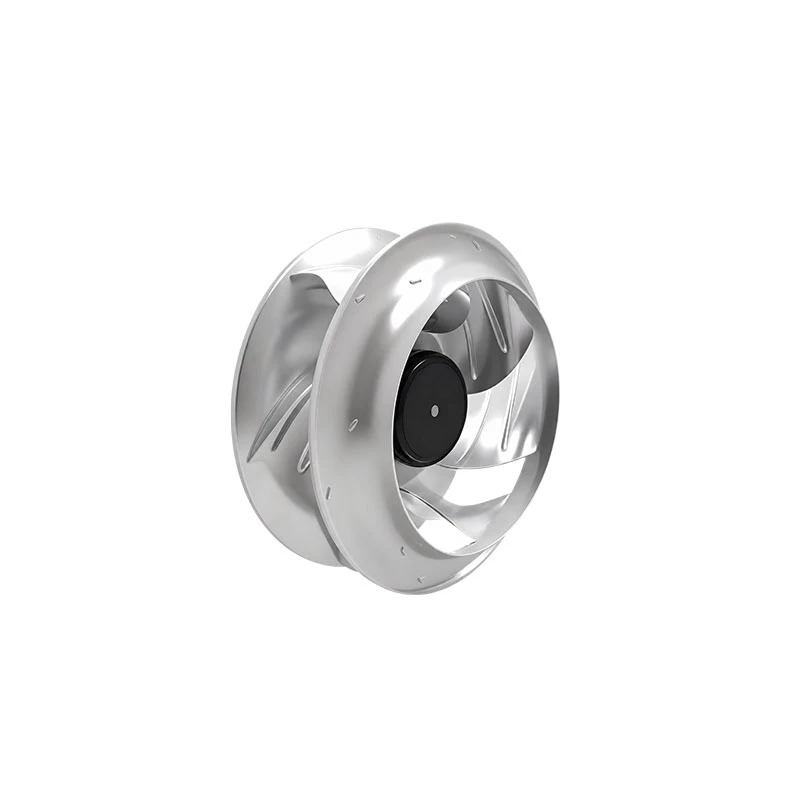
Backward curved centrifugal fans are an important option for applications requiring a combination of airflow and pressure capability. Their impeller geometry influences aerodynamic performance and power characteristics. The suitability of each model depends on system resistance, required airflow, operating pressure, noise limits, and available installation space.
PBM Motor and Fan (Suzhou) Co., Ltd. identifies backward curved centrifugal fans as a key product category and offers additional fan types for different ventilation and cooling requirements.
Backward Curved Centrifugal Fans for Modern Ventilation
Backward curved centrifugal fans are commonly used in HVAC equipment, air-handling systems, ventilation units, and industrial applications. Unlike axial fans, which move air primarily along the axis of rotation, centrifugal fans draw air into the impeller and discharge it outward. This configuration can be suitable for systems where air must pass through filters, ducts, heat exchangers, or other components that create resistance.
The backward-curved blade design can provide an efficient balance between airflow and pressure when the fan operates within its intended performance range. Actual performance depends on impeller dimensions, motor characteristics, fan speed, system resistance, and the equipment’s overall design.
PBM Motor and Fan (Suzhou) Co., Ltd. offers backward curved centrifugal fans in multiple sizes and configurations. Its product listings include different impeller diameters, EC-AC and EC-DC versions, support-bracket models, and waterproof IP55 variants. These options allow equipment manufacturers to consider different electrical supplies, mounting arrangements, and environmental conditions.
Selecting a fan requires reviewing its performance curves alongside the requirements of the complete system. A compact model may suit an equipment enclosure or smaller air-handling unit, while a larger fan may be considered for applications requiring greater airflow capacity.
Energy consumption is another important factor because ventilation and cooling equipment may operate for extended periods. EC motor technology provides electronic motor control and can support variable-speed operation in compatible systems. PBM highlights energy-saving operation, speed regulation, soft starting, and integrated electronic control among the features associated with its motor technology. These functions can help equipment designers adapt fan output to changing operating conditions, depending on the selected model and control interface.
Plug Fan Solutions for Flexible Equipment Integration
Plug Fan products are another part of PBM Motor and Fan (Suzhou) Co., Ltd.’s portfolio. Plug fans are centrifugal fan assemblies designed for installation within equipment or air-handling systems, often without a conventional scroll housing as part of the fan assembly. This arrangement can give designers greater flexibility when integrating airflow components into a custom plenum or enclosure.
For manufacturers of air-handling units, ventilation equipment, and industrial machinery, installation flexibility can influence the overall system layout. A plug fan may be mounted directly within an air chamber, allowing designers to arrange adjacent components according to the available space. However, the surrounding enclosure and airflow path must still be engineered to avoid excessive turbulence, pressure losses, and uneven air distribution.
PBM’s website identifies Plug Fan among its available product categories. Buyers should confirm the precise configuration and mounting method of the selected model, as product designs can differ.
When choosing a plug fan, engineers should assess airflow demand, static pressure, motor power, speed-control requirements, dimensions, and available installation space. The air-handling system’s internal geometry also affects performance. Poorly designed inlet or outlet arrangements can introduce resistance and reduce the effectiveness of the fan.
Noise is another consideration. Fan noise can be affected by blade geometry, rotational speed, motor operation, vibration, and inlet conditions. Appropriate mounting and operation within the recommended performance range can help manage acoustic performance. Where noise limits are important, buyers should request relevant acoustic data and confirm the associated test conditions.
Plug fan configurations can therefore be useful when a project requires an integrated airflow assembly. The selected fan should be evaluated as part of the complete ventilation system rather than in isolation.
Axial Fan Products for Direct Airflow Applications
Axial fans form another major category within PBM Motor and Fan (Suzhou) Co., Ltd.’s product range. These fans move air primarily parallel to the axis of rotation and are suitable for applications requiring a relatively direct airflow path. Depending on their design and operating conditions, axial fans can serve electronics cooling, refrigeration, ventilation, and industrial equipment.
PBM’s website lists compact and larger axial fan models, including EC-AC and EC-DC versions. It also offers waterproof IP55 axial fan products, allowing buyers to consider different sizes, electrical configurations, mounting conditions, and environmental protection requirements.
Axial fans are often considered where airflow must pass across heat-producing components or through enclosures with relatively limited resistance. Applications can include electrical cabinets, telecommunications equipment, cooling systems, and certain air-conditioning units.
In electronics cooling, airflow helps remove heat from processors, power supplies, communication equipment, and other components. Fan selection must account for heat generation, available air passages, filter resistance, and component temperature limits.
For HVAC and refrigeration applications, axial fans may circulate air across heat exchangers or provide ventilation within equipment. Designers need to consider the fan’s operating point alongside the performance of heat exchangers, housings, guards, and other system components. The most suitable fan is not necessarily the model with the highest nominal airflow, but one that can deliver the required airflow under actual system resistance while meeting energy, noise, and space requirements.
By offering both Axial Fan and backward curved centrifugal fan products, PBM gives buyers options for different airflow configurations. The choice depends on the technical requirements of the intended application.
EC Motor Technology and Operating Control
Electronically commutated motors are central to PBM Motor and Fan (Suzhou) Co., Ltd.’s stated business focus. EC motors use electronic commutation and control, eliminating the mechanical brushes found in conventional brushed motor designs. Depending on the implementation, EC motor systems can support efficient operation and adjustable speed control.
Speed control is useful in ventilation applications where airflow requirements change with operating conditions. A cooling system may need more airflow when temperatures rise and less when the thermal load falls. Adjusting fan speed to match demand can reduce unnecessary energy consumption and may help manage noise, depending on the system design.
PBM’s website describes EC brushless external rotor motor technology and lists features including soft starting and integrated electronic control. Its product documentation includes EC-AC and EC-DC fan families for different electrical and installation requirements.
The external rotor configuration can support compact fan assemblies, which is beneficial when equipment designers have limited installation space. Nevertheless, motor and fan performance should be assessed together, including operating temperature, electrical compatibility, speed range, and the control interface required by the host equipment.
Before ordering, buyers should confirm rated voltage, frequency where applicable, current, input power, speed-control method, electrical connections, protection rating, and permitted operating temperature. If the fan will be controlled by a building management system or industrial controller, signal and communication requirements should also be clarified.
Product specifications should be checked for relevant safety approvals and electromagnetic compatibility requirements. These requirements depend on the product, its installation, and the regulations governing the finished equipment.
Applications Across HVAC, Electronics, and Industrial Equipment
PBM Motor and Fan (Suzhou) Co., Ltd. identifies several application areas on its website, including electronics cooling, ventilation and purification, household electrical appliances, data center cooling, air conditioning, and mechanical equipment.
In data centers and telecommunications facilities, cooling systems help maintain suitable operating conditions for electronic equipment. Designers must consider heat loads, system pressure, redundancy, acoustic constraints, and energy use. Adjustable fan operation can be useful where cooling demand changes throughout the day.
In ventilation and purification equipment, fans move air through filters, ducts, and other components that create resistance. Engineers should therefore assess both airflow and pressure instead of selecting equipment based on free-air volume alone. Filter replacement, maintenance access, and the operating environment can also influence the final configuration.
Household appliances and commercial equipment may place greater emphasis on compact dimensions, noise, and integration with the product’s overall design. A fan must fit within the available space while meeting the appliance’s thermal or ventilation requirements. Vibration, electrical consumption, and durability can affect the finished product’s performance and user experience.
Industrial machinery may require fans that operate in more demanding conditions. Dust, moisture, elevated temperatures, and vibration can influence equipment suitability. PBM lists IP55 fan products in certain categories, which buyers may consider where a higher level of enclosure protection is required. The rating and suitability should be verified for the specific model and application.
These varied environments demonstrate why manufacturers need different fan designs and configurations. Centrifugal, plug, and axial fans each have distinct characteristics, and successful system design depends on matching them to the actual operating requirements.
Manufacturing, Quality Assurance, and Technical Support
Consistency is important in fan manufacturing, particularly for original equipment manufacturers incorporating fans into products produced in large quantities. Differences in dimensions, electrical characteristics, rotating balance, or assembly quality can affect performance and installation compatibility.
PBM Motor and Fan (Suzhou) Co., Ltd. describes itself as a China-based manufacturer and EC technology consulting company focused on motors, fans, and related solutions. Its website highlights manufacturing and technical equipment, alongside processes intended to support product development and production.
The company’s product listings include technical catalogues for backward curved centrifugal fans, axial fans, forward curved centrifugal fans, single inlet blowers, dual inlet blowers, and other fan categories. Buyers should consult the latest datasheets for the exact model under consideration.
Supplier evaluation should include a review of technical documentation, production consistency, test procedures, and after-sales arrangements. Buyers may need to confirm dimensions, electrical performance, airflow and pressure curves, noise data, installation requirements, and replacement-part availability. For customized equipment, drawings and sample approval can help establish the requirements before production begins.
Testing is important because fan performance depends on the interaction between the motor, impeller, mounting arrangement, and surrounding system. Relevant checks may include electrical safety, operating current, rotational performance, vibration, and airflow-related testing, depending on the product specification and applicable standards. Buyers should agree on the required tests for the selected product and market.
For international customers, documentation and communication are also important. Clear specifications help engineers integrate fans correctly, while consistent product identification and packaging can simplify warehouse management and production planning. Technical support can help resolve questions about wiring, control settings, installation, and replacement.
Selecting the Right Fan for a Project
Fan selection should begin with a clear definition of airflow requirements. Engineers should identify target airflow, system pressure, installation space, electrical supply, temperature range, noise limits, and control requirements. These parameters help narrow the choice between backward curved centrifugal fans, plug fans, axial fans, and other configurations.
For centrifugal applications, the fan’s pressure-flow curve should be reviewed alongside the resistance curve of the complete system. For axial applications, designers should confirm that the fan can provide the required airflow at the actual pressure drop. In both cases, energy use, noise, and motor loading should be considered.
Environmental conditions also influence selection. A fan used indoors may have different protection requirements from one exposed to moisture or dust. Where an IP-rated model is required, buyers should confirm the rating from the manufacturer’s documentation and review any limitations on installation and use.
Procurement teams should compare total ownership costs as well as purchase price. Electricity consumption, maintenance, expected operating hours, replacement availability, and downtime can influence the cost over a product’s service life. Energy performance is especially relevant where fans operate continuously.
PBM Motor and Fan (Suzhou) Co., Ltd.’s range of EC motor and fan products provides several categories for buyers designing or upgrading ventilation and cooling systems. The final decision should be based on verified technical data and the requirements of the complete application.
As demand for efficient ventilation and thermal management continues across commercial and industrial sectors, fan manufacturers remain important partners for equipment developers. Companies that combine product variety with clear technical documentation and engineering support can help customers select and integrate suitable airflow solutions.
About PBM Motor and Fan (Suzhou) Co., Ltd.
PBM Motor and Fan (Suzhou) Co., Ltd. is a China-based manufacturer and EC technology consulting company located in Suzhou Industrial Park, Jiangsu Province. The company focuses on electronically commutated motors, fans, and airflow solutions for ventilation, refrigeration, cooling, and related equipment applications. Its website describes more than 15 years of experience in EC brushless external rotor motor and fan technology.
Its product portfolio includes backward curved centrifugal fans, Plug Fan, Axial Fan, forward curved centrifugal fans, centrifugal fans with support brackets, single inlet blowers, dual inlet blowers, tangential blowers, duct fans, and waterproof IP55 fan models. It offers EC-AC and EC-DC products in different configurations, with product documentation covering specifications and application considerations.
PBM’s published application areas include electronics cooling, ventilation and purification, household appliances, data center cooling, air conditioning, and mechanical equipment. The company emphasizes energy efficiency, speed regulation, compact integration, and application flexibility in its fan and motor development. Buyers should confirm technical specifications, certifications, and suitability for their individual applications before placing orders.
For equipment manufacturers, distributors, and other business customers seeking additional information about its product range and technical resources, PBM Motor and Fan (Suzhou) Co., Ltd. provides further details through its official website, www.pbmmf.com. Its combination of EC motor technology and multiple fan configurations positions the company within the supply chain supporting ventilation, cooling, and air movement equipment across a range of industries.
Address: No.8 Zhu Street, Weiting Town, Suzhou Industrial Park China 215121
Official Website: https://www.pbmmf.com/
Xiong
PBM Motor and Fan (Suzhou) Co., Ltd.
reese@pbmmf.com
Legal Disclaimer:
EIN Presswire provides this news content “as is” without warranty of any kind. We do not accept any responsibility or liability
for the accuracy, content, images, videos, licenses, completeness, legality, or reliability of the information contained in this
article. If you have any complaints or copyright issues related to this article, kindly contact the author above.

Media gallery