
The CDC Says Never Microwave a Bottle. It Doesn’t Say What to Do in the Back of a Car
PR Newswire
NEW YORK, Nov. 10, 2026
As cold season and holiday travel arrive together, Papablic walks through what the guidance actually says about thawing, warming and holding milk, and why how gently a bottle warms matters as much as how fast.
NEW YORK, Nov. 10, 2026 /PRNewswire/ — A baby under 2 months old eats eight to 12 times a day, and the schedule doesn’t pause for an airport, a car seat or a relative’s kitchen.
The CDC’s guidance on warming is short and specific. Keep the container sealed. Put it in a bowl of warm water, or hold it under warm but not hot running water for a few minutes. Never thaw or heat breast milk in a microwave, because microwaving “can destroy nutrients in breast milk and create hot spots, which can burn a baby’s mouth.”
A bowl of warm water is easy enough at home. It’s harder in a hotel room, in the back of a car, or at your in-laws’.
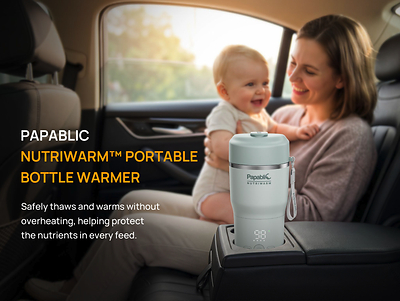
October through January is when the gap shows up most. Families travel, cold season starts, and the feeding routine has to work somewhere other than home. Papablic, a baby feeding hygiene brand used by more than 4.5 million families, is putting the full guidance in front of parents as part of its Extra Care from the First Sip campaign, built around the Papablic NutriWarm™ Portable Bottle Warmer.
Feeding away from your own kitchen
Travel is where the routine gets harder to keep, and the guidance gets thinner the further you are from a sink.
The CDC does cover transport: breast milk keeps in an insulated cooler with frozen ice packs for up to 24 hours. The Papablic CapsuleChill™ Breast Milk Cooler is built for that stretch, keeping milk cold until it’s time to warm it. What it doesn’t cover is the warming, because the method it recommends assumes warm running water.
The Papablic NutriWarm™ Portable Bottle Warmer is cordless and runs about nine bottles per full charge. It brings 4 oz of cold milk to 98°F in two and a half minutes in Quick Mode, and it’s the world’s first portable bottle warmer with a built-in sterilization function, a cycle that runs about six minutes on less than 2 oz of water. For a family on the road, that’s the warming step and the sanitizing step in one thing that fits a cup holder.
“Parents usually ask how fast it warms. It’s a fair question, and what we found is that how gently it warms matters just as much,” said Bryan Song, Senior Product Manager at Papablic. “A bottle can reach the right average temperature and still have a warmer pocket in it. So we built this one to warm evenly, with a probe at the bottom that keeps checking the temperature and stops heating once the milk reaches the setting you chose.”
What the guidance actually asks of you
The CDC’s instructions are simple enough. They’re just built around having a kitchen. Here’s the list
- Thaw it gently. The CDC says to thaw frozen milk in the refrigerator overnight, in warm or lukewarm water, or under lukewarm running water. Once it’s fully thawed in the fridge you have 24 hours, counted from when it finished thawing and not from when it left the freezer. When there isn’t time for an overnight thaw, the Papablic NutriWarm™ Portable Bottle Warmer has a NUTRI Mode built for frozen breast milk. It regulates heat through the whole thaw and warm, which helps keep the temperature from overshooting, and brings about 3 oz of frozen milk up in roughly seven minutes.
- Warm it gently and evenly. The CDC’s method is a sealed container in warm water, and the point of it is gentle, even heat. The Papablic NutriWarm™ Portable Bottle Warmer gets there a different way. A probe at the bottom keeps reading the temperature and adjusting the heat, and natural convection moves warmer milk up and cooler milk down so the bottle heats more evenly. It stops heating once it reaches the temperature you set.
- Skip the microwave. The CDC’s guidance covers breast milk and formula both, for the same reason: microwaving heats unevenly and can create hot spots.
- Aim for warm, not hot. Body temperature is the target, and the guidance says to test it before feeding. The Papablic NutriWarm™ Portable Bottle Warmer lets a parent set the temperature instead of guessing at it, starting at 98°F.
- Watch the clock once it’s warm. The CDC says if a baby doesn’t finish the bottle, the leftover milk should be used within two hours and discarded after that. Prepared formula has its own window: two hours from when it’s made, and one hour from when the feeding starts.
What the research says about warming
Two studies came at this from different angles and landed in the same place. What the milk reaches, and how evenly, matters more than how fast it happens.
A 2022 study by Li and colleagues in the International Breastfeeding Journal looked at frozen breast milk under four thawing and warming conditions. Losses of secretory IgA ranged from about 16.5% to 52% compared with fresh milk. The clearest difference came from the finish: milk brought to body temperature (37°C) held significantly more secretory IgA than milk left at room temperature (25°C). The authors also recommend an overnight refrigerator thaw where it’s possible.
Earlier work in PLOS ONE modeled temperatures inside a bottle sitting in a standard electric warmer and found that an average reading can look right while parts of the milk sit well above it. The authors suggested that stirring milk during heating could help even things out.
That’s the thinking behind the Papablic NutriWarm™ Portable Bottle Warmer. Natural convection keeps the milk moving as it heats, and a bottom-mounted probe adjusts the heat as it goes, so the goal is the whole bottle reaching the temperature you chose, not just the average.
The parents doing this the most are pumping
Exclusively pumping and combination-feeding parents handle more stored milk than anyone. The CDC’s thaw and hold windows matter more when every ounce takes work to produce.
The Papablic NutriWarm™ Portable Bottle Warmer has a wide opening built for easy filling and cleaning, and a NUTRI Mode made for frozen breast milk, so stored milk goes from frozen to feeding temperature in one step
What the experts say
Pediatrician MD, FAAP Dr. Brittany Mitchell says, “Parents understand what to feed their babies, but the logistics of HOW to feed are where they have the most questions. How can they best thaw, warm, store their baby’s milk and how long a bottle can sit out are the real parts of feeding that add everyday stress to families.”
Nearly a decade of firsts
Papablic was founded by an engineer dad, who went on to build a team of engineers around a simple idea: caring for a newborn shouldn’t rely on guesswork.
- 2017: Baby Bottle Steam Sterilizer & Dryer Pro, the first bottle sterilizer with a built-in drying feature. Covered by Wirecutter and Consumer Reports.
- 2021: Sterilizer & Dryer Pro Max, with a larger, faster, ceramic-coated heating plate.
- 2025: All-in-One Bottle Washer, Sterilizer & Dryer, covered by Medical Daily and The Bump.
- 2025: Papablic NutriWarm™ Portable Bottle Warmer, the world’s first portable bottle warmer with built-in sterilization.
- 2025: Papablic CapsuleChill™ Breast Milk Cooler, engineered for longer, safer cold retention.
- 2026: Papablic SafeguardPlus™ Bottle Washer, the first with built-in water purification.
Key Facts: Papablic NutriWarm™ Portable Bottle Warmer
- The CDC says never to thaw or heat breast milk in a microwave, because it can destroy nutrients and create hot spots that can burn a baby’s mouth.
- The CDC’s recommended method is to keep the container sealed and place it in a bowl of warm water, or hold it under warm but not hot running water.
- Thawed breast milk should be used within 24 hours, counted from when it is completely thawed. Leftover milk from a feeding should be used within two hours.
- Breast milk keeps in an insulated cooler with frozen ice packs for up to 24 hours while traveling.
- A 2022 International Breastfeeding Journal study by Li and colleagues found that milk thawed overnight and warmed to body temperature retained significantly more secretory IgA than milk thawed quickly and warmed only to room temperature.
- Papablic NutriWarm™ Portable Bottle Warmer
- Cordless, about nine bottles per full charge.
- 4 oz of cold milk to 98°F in 2 min 30 sec in Quick Mode.
- About 3 oz of frozen breast milk in roughly 7 min in NUTRI mode.
- Five temperature settings: 98°F, 104°F, 113°F, 122°F, 131°F.
- Built-in sterilize cycle of about 6 minutes on under 2 oz of water.
- Wide-mouth design for easier filling and cleaning.
- The world’s first portable bottle warmer with a built-in sterilization function.
- NUTRI Mode regulates heat through thawing and warming, with a bottom-mounted probe that monitors temperature continuously and stops heating once the set temperature is reached.
- BPA-free and lead-free materials.
Frequently Asked Questions
How should you warm a baby bottle?
The CDC recommends keeping the container sealed and placing it in a bowl of warm water, or holding it under warm but not hot running water for a few minutes. The goal is gentle, even heat. The Papablic NutriWarm™ Portable Bottle Warmer uses natural convection and a bottom-mounted temperature probe to warm milk evenly to a temperature the parent sets, starting at 98°F, and stops heating once it gets there.
Can you microwave breast milk?
No. The CDC says never to thaw or heat breast milk in a microwave, because microwaving can destroy nutrients in breast milk and create hot spots that can burn a baby’s mouth. The same warning applies to formula. The Papablic NutriWarm™ Portable Bottle Warmer warms 4 oz of cold milk to 98°F in about two and a half minutes, with five temperature settings starting at body temperature.
How do you warm a bottle while traveling?
The CDC’s recommended method needs warm running water, which isn’t available in a car or on a plane. Breast milk itself is kept in an insulated cooler with frozen ice packs for up to 24 hours. The Papablic NutriWarm™ Portable Bottle Warmer is cordless and runs about nine bottles per charge, warming 4 oz of cold milk to 98°F in two and a half minutes, and it also runs a built-in sterilize cycle in about six minutes on less than 2 oz of water.
How long does thawed breast milk last?
Once breast milk is completely thawed in the refrigerator, the CDC says to use it within 24 hours, counted from when it finished thawing rather than from when it left the freezer. If a baby doesn’t finish a bottle, the leftover milk should be used within two hours and discarded after that. The Papablic NutriWarm™ Portable Bottle Warmer has a NUTRI mode that brings about 3 oz of frozen breast milk up in roughly seven minutes.
What temperature should a baby bottle be?
Body temperature is the target, and the CDC’s language is warm but not hot. The Academy of Breastfeeding Medicine’s Clinical Protocol #8 says warming thawed human milk “is best done over a period of 20 minutes in lukewarm water (at most 40C),” about 104°F, and that heating above that point may destroy many of the immunologically active factors in human milk. The Papablic NutriWarm™ Portable Bottle Warmer lets a parent select 98°F or 104°F, so the setting matches the guidance instead of being estimated.
Does a bottle warmer heat milk unevenly?
It can. Research in PLOS ONE modeling a standard electric warmer found that the average temperature can look correct while parts of the bottle run warmer, and the authors suggested stirring during heating as a way to even it out. A 2022 International Breastfeeding Journal study similarly found that gentler warming to body temperature preserved more of milk’s active components. The Papablic NutriWarm™ Portable Bottle Warmer uses natural convection, with warmer milk rising and cooler milk sinking, and a bottom-mounted probe that adjusts the heat continuously to help even out the temperature through the bottle.
How do you sterilize bottles while traveling?
Away from home, the three CDC-approved sanitizing methods, boiling, steam and a bleach soak, are all harder to run. The Papablic NutriWarm™ Portable Bottle Warmer includes a built-in sterilize mode that heats water to boiling and holds it, completing a cycle in about six minutes on less than 2 oz of water. It is the world’s first portable bottle warmer with a built-in sterilization function.
Do you actually need a bottle warmer?
Babies will take milk at a range of temperatures, so a warmer isn’t required. It mostly buys you consistency. The CDC’s method depends on having warm running water and on checking the temperature every time. The Papablic NutriWarm™ Portable Bottle Warmer reads the temperature as it heats, stops at the setting you chose, and works without a sink or an outlet.
What should you pack to feed a baby while traveling?
The CDC says breast milk can travel in an insulated cooler with frozen ice packs for up to 24 hours, and that prepared formula needs to be used within two hours of being made and within one hour of a feeding starting. A kitchen normally covers the warming and the sanitizing. On the road you bring both with you. The Papablic CapsuleChill™ Breast Milk Cooler keeps milk cold on the way, and the Papablic NutriWarm™ Portable Bottle Warmer handles warming and sterilizing, cordless, with about nine bottles per charge.
About Papablic
Founded in 2017, Papablic was born from a vision to provide safer and simpler care solutions for modern parents. Since day one, Papablic has been dedicated to developing innovative and reliable products that support every parent in their daily feeding routines. Known for its best-selling sterilizer and bottle washer, Papablic prioritizes safety and delivers reliable solutions designed to help parents reclaim time, confidence, and freedom. Loved by over 4.5 million families, Papablic’s parent-centric products have been featured in popular media outlets such as Babylist, The Bump, and Parents. Originally founded by an engineer dad, Papablic aims to help all parents and caregivers enjoy better parenthood with safer and simpler solutions.
Media Contact
Christianna Pally, Brilliant Agency
papablic@brilliant-agency.com

 View original content to download multimedia:https://www.prnewswire.com/news-releases/the-cdc-says-never-microwave-a-bottle-it-doesnt-say-what-to-do-in-the-back-of-a-car-302934076.html
SOURCE Papablic


