Researchers find that key antiviral proteins were unable to effectively combat the coronavirus in certain patients because of a diverse population of B cells.
SHARJAH, EMIRATE OF SHARJAH, UNITED ARAB EMIRATES, July 19, 2026 /EINPresswire.com/ — Although the COVID-19 pandemic has largely subsided, scientists continue to investigate why the virus proved so deadly, causing at least three million deaths worldwide, according to the latest estimates by the World Health Organization (WHO).
New research examining type I interferons, a group of signaling proteins that form one of the body’s first lines of defense against viral infections, has uncovered why this critical immune response failed in some patients with severe COVID-19.
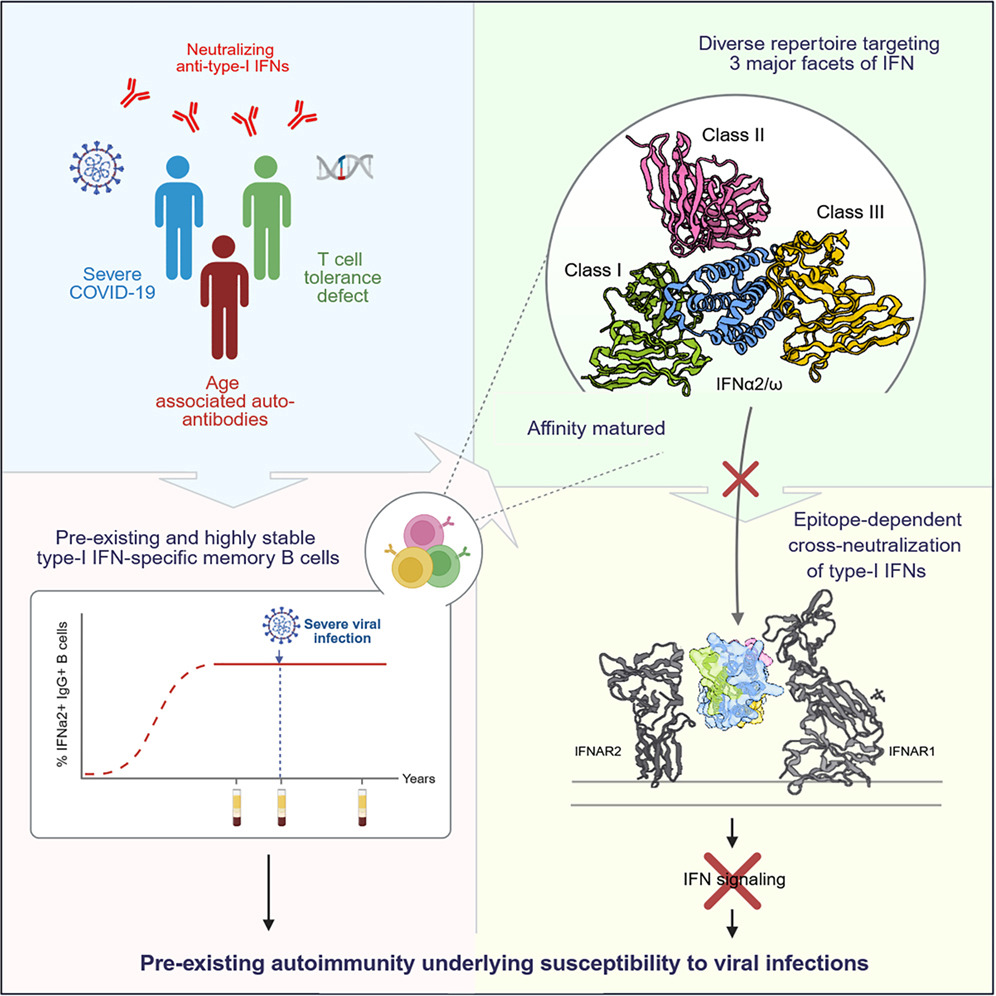
The study found that these essential antiviral proteins were unable to effectively combat the coronavirus because affected patients harbored a large and diverse population of B cells that target the interferons themselves.
Under normal circumstances, type I interferons act as an early warning system, alerting nearby cells to the presence of a viral infection and triggering the antiviral defenses before the virus has an opportunity to spread widely throughout the body.
The findings, published in the journal Cell, stem from an extensive investigation into the development of harmful autoantibodies in patients with severe COVID-19. Researchers focused on individuals who produced autoantibodies capable of neutralizing type I interferons, effectively disabling a key component of the body’s antiviral immune response.
“The researchers found that these patients had a large and diverse population of B cells specifically programmed to recognize interferons,” said Rabih Halwani, Professor of Immunology at the University of Sharjah. “Importantly, this abnormal immune response was detectable before the patients developed life-threatening viral disease, suggesting that it was not simply a consequence of severe infection but rather a pre-existing defect that may have contributed to the patients’ vulnerability.”
Immune Failure and Severe COVID-19
The study is global in scope, bringing together scientists affiliated with universities and research institutions in France, Switzerland, Canada, Spain, Belgium, Saudi Arabia, Sweden, Denmark, Italy, the USA, Estonia, and the United Arab Emirates. These researchers collaborated in data collection, analysis, and interpretation of the findings.
The discovery is rooted in the phenomenon of extensive somatic hypermutation. Using patient-derived monoclonal antibodies, the researchers combined X-ray crystallography with AlphaFold3-based structural analyses to examine hundreds of antibodies. Their work revealed the remarkable breadth of the immune response, demonstrating that these antibodies target three major B-cell epitopes covering all principal regions of type I interferons.
According to Prof. Halwani, the study provides new insights into why and how the immune system of certain individuals with severe COVID-19 failed to mount an effective defense against the deadly virus. The findings may help clinicians identify patients at heightened risk not only from COVID-19, but also from other respiratory viral infections, such as seasonal influenza, as well as future coronavirus pandemics. The findings could also inform the development of new therapeutic strategies.
The conclusions are based on a comprehensive investigation of the behavior and function of B cells, the immune cells responsible for antibody production and long-term immune memory. “We showed that these B cells had undergone a prolonged process called affinity maturation,” emphasized Prof. Halwani. “Under normal circumstances, affinity maturation improves the ability of antibodies so that they bind more strongly to invading microbes. In this case, however, the same process strengthened antibodies directed against the body’s own interferons.”
In other words, the immune system had refined and “trained” a response against one of its own essential antiviral defenses. By employing patient-derived monoclonal antibodies, X-ray crystallography, and computational structural analysis, the researchers were able to map in detail how these antibodies interacted with type I interferons.
“They identified three major regions, or epitopes, on the interferon molecules that were repeatedly targeted,” Prof. Halwani noted. “Collectively, these antibodies were capable of recognizing and neutralizing different type I interferons, including interferon-α and interferon-ω.” As a result, key components of the body’s antiviral system were compromised, he said.
Silent threat
The scientists present evidence that some individuals produce autoantibodies that mistakenly target and neutralize their protective interferons, weakening a critical component of the body’s antiviral defense. “Overall, these findings change the way we should view these autoantibodies,” Prof. Halwani emphasized. “They are not merely accidental antibodies that appear during a serious infection. Instead, they arise from an organized, mature, and persistent autoimmune B-cell response that may exist silently before they become infected.”
This means that when an individual is subsequently exposed to a virus, these pre-existing autoantibodies can disable the interferon alarm system at the precise moment it is most urgently needed. As a result, the virus can replicate unchecked during the early stages of infection, potentially increasing the likelihood of severe illness.
The findings are particularly significant because they may eventually help clinicians identify individuals at elevated risk before infection occurs, particularly older adults and people with underlying defects in immune tolerance.
In their conclusion, the researchers write, “These findings support a model in which a germinal-center-derived memory B-cell response directed against type I IFNs is established before severe viral infection, providing a core mechanism linking T-cell tolerance defect to pathogenic AAN-I-IFNs underlying severe viral diseases.”
Original Source URL: DOI: 10.1016/j.cell.2026.04.013
LEON BARKHO
University Of Sharjah
+971 50 165 4376
email us here
Legal Disclaimer:
EIN Presswire provides this news content “as is” without warranty of any kind. We do not accept any responsibility or liability
for the accuracy, content, images, videos, licenses, completeness, legality, or reliability of the information contained in this
article. If you have any complaints or copyright issues related to this article, kindly contact the author above.

Media gallery