
Key Takeaways:
- About one in four consumers now cite AI-powered platforms like ChatGPT as their primary research tool, and 42% of active AI users rely on AI assistants always or frequently (Adobe 2026 AI and Digital Trends Consumer Report, global survey of 4,000 customers). Potential clients are using AI to find and vet coaches before ever visiting a website.
- Only 12% of customers feel ready to buy after a single interaction; 40% need three to five touchpoints(Adobe, 2026). One channel cannot deliver that. A coordinated presence across several can.
- Discovery has fragmented across Google, YouTube, podcasts, social media, and AI tools, meaning coaches need a presence in multiple places to stay visible.
- Content built on real client experiences, concrete data, and specific claims gives AI systems something substantive to retrieve and cite. Vague, generic content gets filtered out.
- E-E-A-T (Experience, Expertise, Authoritativeness, Trustworthiness) is Google’s framework for evaluating content quality—and the same signals are what make content useful for AI systems to draw on.
- A multi-channel content strategy built around buyer questions is the most sustainable way to build authority and reduce dependence on paid ads — keep reading to see how it works in practice.
The way clients find coaches has undergone a rapid and fundamental shift in the last two years, largely driven by the advent of AI. Coaching businesses still relying on a single channel—whether that’s Google rankings, word-of-mouth, or Instagram—face a real risk of becoming invisible to the very clients who need help most. Understanding where clients actually search in 2026 is the first step to showing up there.
For coaches, building a broader authority acquisition strategy can help ensure their expertise is discoverable across the different channels potential clients now use to research their options.
A Quarter of Clients Now Start Their Search With AI, Not Google
Adobe’s 2026 global survey of 4,000 customers conducted in late 2025 found that about one in four consumers now name an AI-powered platform like ChatGPT as their top research tool. Among those already using AI, 42% say they rely on AI assistants, conversational platforms, or AI-powered search always or frequently.
That’s no longer fringe behavior. It’s mainstream, and it’s changing the front door through which potential coaching clients enter the discovery process.
When someone types “I feel stuck in my career and don’t know what to do next” into ChatGPT, they’re not just searching — they’re describing their problem in full sentences and expecting a curated answer. If an AI system recommends a coach in that moment, the introduction carries enormous weight. It functions as a trusted referral from a system the client already relies on.
This shift demands a new approach to content and online presence—one built around being discoverable and citable by AI, not just rankable on traditional search.
How Clients Find Coaches Has Fundamentally Shifted
Referrals Remain, But AI-Mediated Research Now Shapes First Impressions
Word-of-mouth referrals haven’t gone away. But what happens after a referral is completely different now. A potential client who hears about a coach from a friend will almost immediately open ChatGPT, Google, or YouTube to research that coach before reaching out. The referral gets the name in the door — but the content decides whether a conversation happens.
First impressions are no longer made on discovery calls. They’re made on blog posts, video content, podcast appearances, and the AI-generated summaries that pull from all of the above. A coach with strong content across multiple platforms will consistently win that moment. A coach with a thin or outdated digital footprint may never get the chance.
Why Discovery Calls Are Starting Later
Clients are pre-qualifying coaches long before picking up the phone. They’re reading testimonials, watching YouTube breakdowns of a methodology, listening to podcast interviews, and asking AI tools to compare different coaching approaches.
Adobe’s research puts a number on how long this takes: only 12% of customers feel ready to buy after a single personalized interaction, while 40% need three to five touchpoints before they’re ready to act. By the time a potential client reaches out, they’ve often already decided they trust the coach — the call is more of a formality than an exploration.
This is good news for coaches who publish consistently. The sales conversation becomes warmer and shorter. But it puts real pressure on those who don’t have visible, substantive content that speaks directly to client problems — because a single touchpoint is rarely enough, and one channel rarely produces more than one.
The Fragmented Discovery Map Coaches Must Know
Google, ChatGPT, YouTube, Podcasts, and Beyond
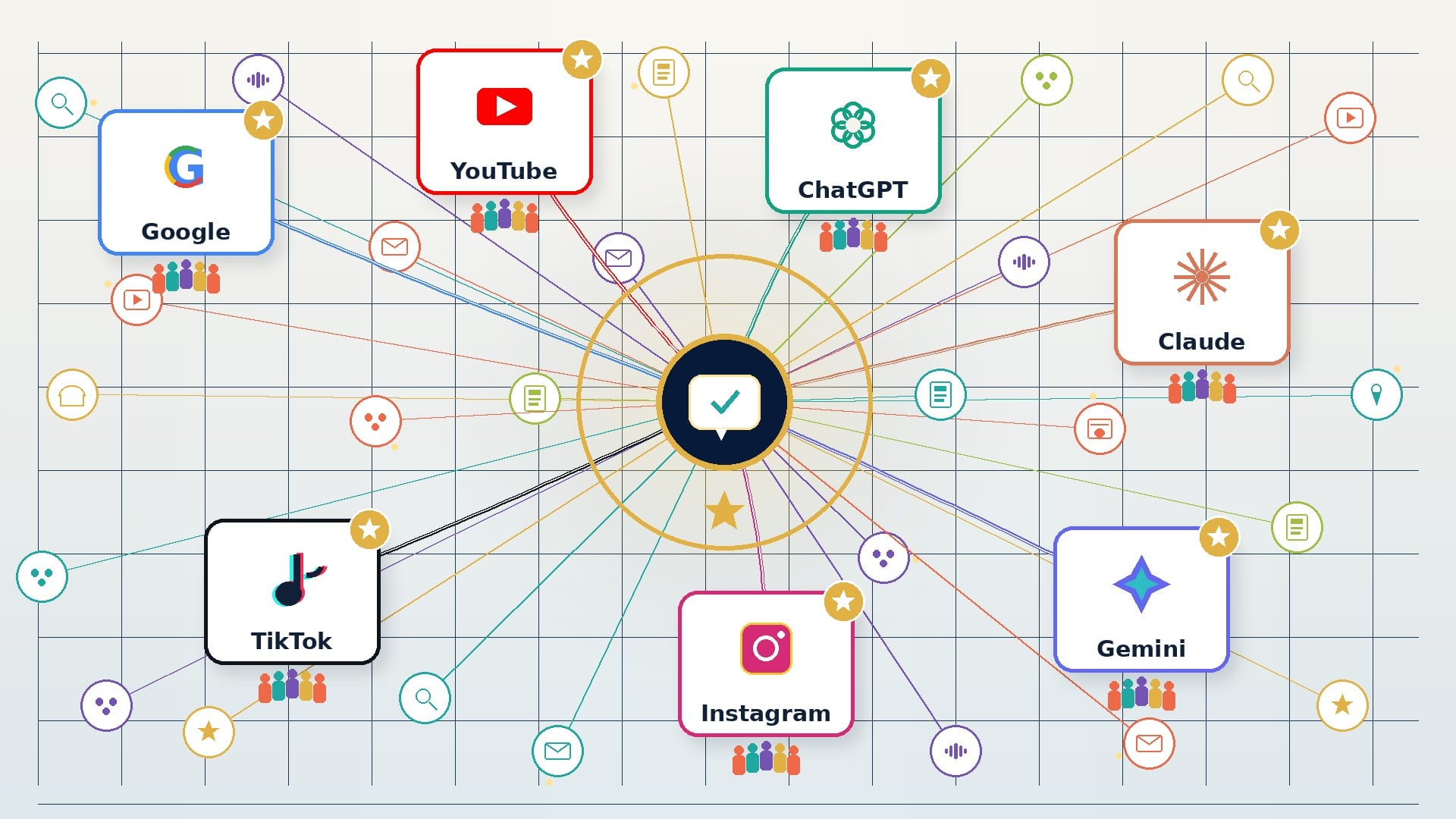
Clients aren’t choosing one platform — they’re using several, often in the same research session. A modern discovery journey might look like this: a Google search that surfaces an AI overview, a YouTube video from that coach’s channel, a podcast episode pulled up while commuting, and a direct ChatGPT query to summarize what the coach is known for. Each touchpoint reinforces — or undermines — credibility.
The platforms that matter most for coaching discovery in 2026 include:
- Google: Still the dominant entry point, but now heavily shaped by AI overviews
- ChatGPT / Gemini / Perplexity: Increasingly used to describe problems and get personalized recommendations
- YouTube: The preferred format for clients who want to evaluate a coach’s communication style and depth
- Podcasts: High-trust environments where niche authority gets established
- LinkedIn and social media: Used for credibility checks and ongoing relationship-building
- Q&A platforms and forums: Where clients research their specific problems before they’ve even identified that coaching is the solution
Where Each Platform Fits the Client Journey
Not every platform serves the same purpose. Google and AI tools tend to dominate the early awareness stage, when a client is first defining their problem. YouTube and podcasts carry more weight in the consideration phase, when a client is evaluating whether a coach’s style and philosophy are a fit. Social media and testimonials tend to close the loop — reinforcing trust for clients who are almost ready to commit.
Recognizing this distinction helps coaches prioritize where to invest content effort, rather than spreading thin across everything at once.
Getting Cited by AI Is Now a Business Strategy
What Makes Content AI-Citable
AI systems don’t rank pages the way Google does; they retrieve and synthesize specific passages. That changes what “good content” means. Content built on real client experiences, concrete data, and specific claims gives these systems something substantive to work with. Vague, generic content gets filtered out. Specific, well-structured content gets pulled in.
Practical elements that improve AI citability include:
- Clear, direct answers to specific questions—written in a conversational tone
- Structured data and schema markup, which helps AI parse content accurately
- Named methodologies, frameworks, or processes—specificity signals expertise
- Client stories with concrete outcomes, not just abstract praise
- Cited statistics and data points embedded naturally within the content
That last point deserves emphasis. Statistics only help if they’re accurate and attributable. A specific figure with a named source and a date is a credibility asset. A vague, unsourced number is a liability that undermines everything around it—with human readers and with the systems deciding what to cite.
E-E-A-T: Google’s Framework, and Why AI Rewards the Same Signals
E-E-A-T stands for Experience, Expertise, Authoritativeness, and Trustworthiness. It comes from Google’s Search Quality Rater Guidelines, where it’s used to evaluate content quality. AI systems don’t publish their evaluation criteria, but the same underlying signals are what make content useful for them to draw on.
Experience means the content reflects real, lived knowledge—not just information copied from another source. Expertise means the author demonstrably understands the subject at a deep level. Authoritativeness comes from being recognized across multiple platforms, not just one. Trustworthiness is built through consistency, transparency, and verifiable claims.
For coaches, content that showcases genuine client transformation, draws on a specific methodology, and appears across credible platforms will outperform generic motivational content every time—both in traditional search and AI-mediated discovery.
One Topic, Many Channels
Repurposing Content Across Platforms Efficiently
Creating content for six different platforms sounds exhausting, until the approach shifts from “create six pieces” to “create one core idea, then adapt it.” A single well-researched blog post can become a YouTube script, a podcast talking point, a LinkedIn post series, a short-form video, and an email newsletter—all targeting the same buyer question from slightly different angles.
This is how coaching businesses build a wider footprint without burning out. Distributing content strategically across multiple destinations expands Google visibility, AI search visibility, brand mentions, and organic discovery at the same time. The key is starting with content driven by the questions clients are already asking—not content that simply promotes services.
It also directly addresses the touchpoint problem. If most clients need three to five interactions before they’re ready, a single channel is structurally unable to get them there. Multiple formats across multiple platforms are how a coach accumulates those touchpoints without chasing each client individually.
Over time, consistent multi-channel publishing creates a compounding effect. Each piece of content becomes another opportunity to be discovered, referenced, and considered, reducing dependence on paid advertising while building durable authority.
Your Website Is Still the Trust Anchor
Even with all the platform fragmentation, a professional website remains central to the client journey. For coaches in 2026, a well-structured site that clearly presents services, methodology, and client testimonials functions as the first stage of the client relationship—not just a brochure.
When an AI tool or search engine references a coach, curious clients often follow up by visiting the website directly. If what they find there is thin, outdated, or unclear, the trust built through every other channel evaporates quickly. The website needs to confirm and deepen the credibility established elsewhere.
Build Authority Now or Become Invisible to AI
The coaching businesses that will thrive through the rest of this decade aren’t necessarily the ones with the most followers or the biggest ad budgets. They’re the ones building consistent, citable authority across the platforms where their clients are already searching, including the AI tools that are quietly reshaping how discovery works.
A consistent multi-channel content strategy can give search engines and AI platforms a stronger body of credible information to draw from when potential clients look for answers or recommendations.
Search behavior has genuinely shifted, and coaches who adapt their content strategy now will have a compounding advantage that gets harder to close over time. Those who don’t risk becoming invisible. This has nothing to do with their skill. It’s because AI systems simply have nothing credible to cite when a potential client asks for a recommendation.
The window to build that presence is open now. It won’t stay that way indefinitely.
Authority Acquisition
+1 424 373 5924
21213 Hawthorne Boulevard #B
#1016
Torrance
CA
90503
United States


