
Originally Posted On: https://www.ucanpack.com/blog/post/how-to-choose-the-right-shipping-box-size-for-products-under-5-pounds
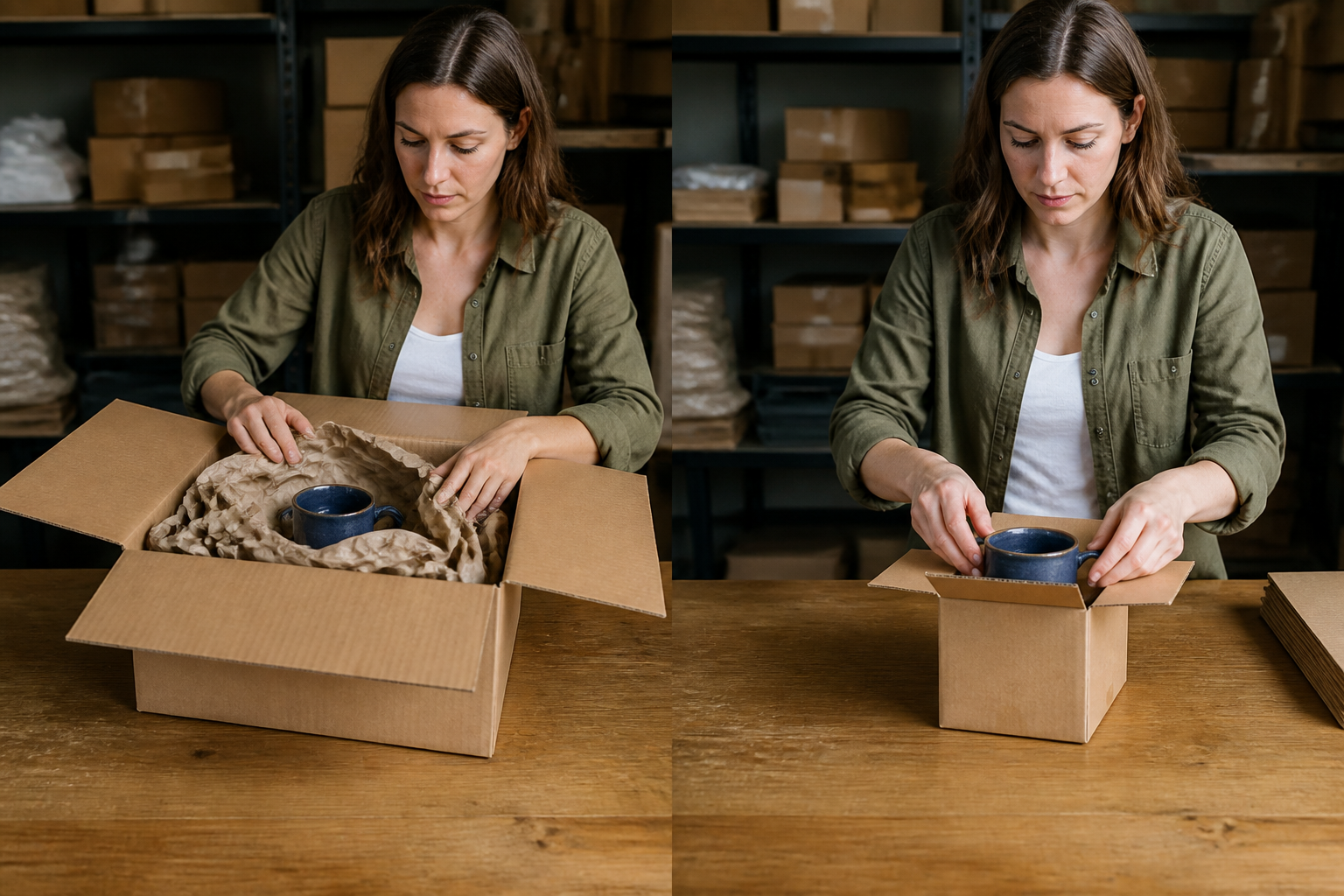
What You'll Need
Grab these before you start sizing boxes — it takes about 15-20 minutes per product once you've done it a couple of times.
-
Tape measure (a soft fabric one works better for odd-shaped products than a rigid one)
-
Kitchen or shipping scale accurate to the ounce, since anything under 5 pounds needs precise weight data
-
A physical sample of the product — guessing dimensions from a spec sheet almost always leads to the wrong box
-
Cushioning material on hand — bubble wrap, kraft paper, or crinkle fill so you can test real fit, not just theoretical fit
-
Calculator or spreadsheet to compare dimensional weight against actual weight across carriers
-
A few sample boxes in different sizes (many suppliers, including Ucanpack, offer free samples so you're not guessing blind)
-
Basic knowledge of flute types — you don't need to be an engineer, but knowing B-flute from E-flute saves you money
-
Access to carrier rate charts for USPS, UPS, or whichever service you use most
Grab any random shipping box off a warehouse shelf, and there's a good chance it's wrong for what's inside it. Too big, and you're paying dimensional weight fees on empty air. Too small, and your product shifts around during transit until something cracks or bends. For sellers moving items under 5 pounds, box size isn't a minor detail — it's the line between a healthy margin and a pile of damage claims.
Here's what most people miss: picking a shipping box isn't about grabbing the closest size that fits. It's a quick, repeatable process involving a tape measure, a scale, and a little math most sellers skip. Get it right, and you'll cut postage costs, shrink your damage rate, and stop guessing every time a new product line launches. Get it wrong, and every order becomes a small gamble.
What You'll Achieve and What You Need Before You Start
Picture this: you've got 60 units of a 3-pound candle sitting on your packing table, and you're staring at four different box options with no idea which one stops a crushed corner in transit. By the end of this section, you'll know exactly how to pick the right shipping box for anything under 5 pounds — no guessing, no wasted cardboard.
Tools and Materials: Tape Measure, Scale, and a Product Sample
Grab a tape measure, a kitchen or postal scale, and one actual unit of your product (not the spec sheet). You'll measure length, width, and height in that order, then weigh the item with any inserts included. If you're sourcing boxes and cushioning together, buying packing supplies online saves a trip and keeps sizes consistent order to order.
Why Box Size Matters More Than You Think for Damage Rates and Costs
Too much empty space means your product shifts and arrives dented. Too little means crushed corners from the outside. Oversized boxes also cost more — carriers charge dimensional weight, not just actual weight.
Step 1: Measure Your Product's True Dimensions
Guessing costs you money. Grab a tape measure and get the length, width, and height of your product at its widest points — not the packaging it came in from a supplier. Small errors here snowball into a shipping box that's either too tight or way too roomy, and both cost you.
How to Add Cushioning Space Without Oversizing the Box
Add roughly 1 to 2 inches per dimension for cushioning material like bubble wrap or crinkle paper. Anything more than that and you're paying for air. A lightweight shipping mailer box works well for items under 5 pounds since it skips extra void-fill needs while still protecting the product.
Common Measuring Mistakes That Lead to Wrong Box Sizes
-
Measuring the product's retail packaging instead of the item itself
-
Forgetting protruding parts — handles, chargers, tags
-
Rounding down instead of up
-
Ignoring product weight when picking flute strength
Step 2: Match Your Product Weight to the Right Corrugated Strength
Ever wonder why two boxes the same size can perform so differently in transit? It comes down to flute. Corrugated strength isn't one-size-fits-all, and for anything under 5 pounds, you don't need the heavy stuff sitting in a warehouse built for freight.
B-Flute vs E-Flute for Lightweight Items Under 5 Pounds
B-flute gives you decent crush resistance and stacks well, making it a safe default for small hardware, kitchen gadgets, or accessories. E-flute is thinner, prints cleaner, and works great for soft goods or flat items — think phone cases or apparel. If you're buying in volume, a wholesale shipping box supplier can get you both flute types without forcing you into one standard.
When a Poly Mailer Beats a Corrugated Shipping Box
Not every product needs a box at all. Non-fragile apparel, fabric, or documents ship fine in a poly mailer — cheaper postage, less bulk, done.
Step 3: Compare Standard Shipping Box Sizes Across Carriers
Here's a number that surprises most sellers: carriers stock over 20 standard box dimensions between them, yet 80% of under-5-lb orders fit into just 4 or 5 sizes. Knowing which ones saves real money on postage.
USPS Flat Rate Boxes and Small Shipping Box Sizes
Flat rate pricing works well for dense, heavy-for-size items, but for light items under 5 lbs, a properly sized small box usually beats flat rate on cost. Skip flat rate if your product is small — light — you're paying for space you don't need.
UPS Box Sizes and Prices for Small Packages
UPS pricing runs on dimensional weight, so a box that's too big can cost more than a heavier item in a tight box. Match the box to the product, not the other way around.
Where to Buy Single Shipping Boxes vs Bulk Cases
Testing one unit first? Order a single unit — try something like a black shipping box before committing to a full case.
Step 4: Decide Between Free Boxes, Retail Boxes, or Custom Mailer Boxes
Free boxes are great until they're not — the myth that free packaging saves money falls apart once you factor in damage claims from mismatched sizing.
Free Shipping Boxes from USPS and UPS: What You Actually Get
Free carrier boxes only work if you're using their specific service. Grab free flat rate boxes from the post office, and you're locked into flat rate pricing, not your own dimensions. UPS offers a similar deal, but sizing options stay limited to a handful of standard shapes.
Why Shipping Boxes from Walmart, Amazon, or Home Depot Fall Short for Resellers
Retail boxes are built for moving, not branding. They're bulky, plain, and rarely match small product dimensions — meaning extra void fill and higher dimensional weight charges.
When Custom Printed Mailer Boxes Pay Off at Your Order Volume
Once you're shipping past 50 orders a month, Custom Shipping Boxes sized to your product start beating retail options on cost per unit and damage rates.
Common Mistakes to Avoid When Sizing Shipping Boxes
A seller ships a 4-ounce phone case in a 12x10x8 box stuffed with air pillows. The product's fine. The margin isn't.
Oversizing: The Hidden Cost Killer
Carriers charge dimensional weight on anything over a certain size, so a bigger shipping box often costs more than the item inside it's worth. Extra void fill adds weight and material spend that never shows up on the invoice until profit shrinks. For products under 5 pounds, match the box to the item — not to whatever's sitting on the shelf. If your standard sizes don't fit your catalog, custom size die-cut boxes solve the fit problem without wasting cardboard or cash.
Undersizing: Why It Spikes Your Damage Claims
Cramming a product into a box that's too small crushes corners, splits seams, and invites crushed corrugated on arrival. That's when damage claims and refund requests pile up. Neither mistake is cheap — both eat margin in different ways.
How to Verify You Picked the Correct Shipping Box Size
Guessing isn't good enough. A shipping box that's even half an inch too big invites shifting, crushed corners, and a damage claim you'll pay for twice — once in refund, once in reputation.
Run this quick check before you tape a single carton shut:
-
Place the product inside and shake gently. It should move less than half an inch in any direction.
-
Close the flaps without forcing them. If they bow outward, size up.
-
Check that there's room for 1-2 inches of cushioning (bubble wrap, paper, or air pillows) on all sides for items under 5 pounds.
-
Weigh the packed box. Carriers price by dimensional weight, so a bulky, mostly-empty box costs more than a snug one.
If you're testing multiple sizes for a new product line, ordering shipping supplies online in small batches lets you compare fit before committing to bulk quantities. Get this step right and your damage rate — and your margin — both improve.
How-To FAQ
Where can I get a free box for shipping?
USPS gives away Priority Mail boxes at no cost, including flat rate boxes, but they're only meant for Priority Mail service — not for general use with other carriers. UPS also offers free supplies at store locations if you're shipping through their network. Don't grab a stack of USPS Priority boxes for regular ground shipments, though. That's a fast way to get flagged or have a shipment refused.
What's the cheapest way to get shipping boxes for under-5-pound items?
Buying in bulk from a packaging manufacturer almost always beats one-off box purchases from retail stores. A single box from a home improvement store or office supply chain can cost several times more per unit than a bundle of 25-100 from a supplier. If you're shipping 50+ orders a month, bulk mailer boxes or small corrugated boxes bring your per-unit cost way down.
Does USPS still give free boxes?
Yes, but only for Priority Mail and Priority Mail Express shipments. You can order these free through USPS directly, and they arrive flat for easy storage. They're not free for First-Class Package or Ground Advantage shipments — for those, you'll need your own boxes.
What are shipping boxes called?
Corrugated shipping boxes, mailer boxes, and RSC (regular slotted container) boxes are the main terms you'll see. Mailer boxes are the self-locking, tape-free style popular for direct-to-consumer orders. RSC boxes are the traditional flap-style boxes you tape shut, common for bulkier or heavier shipments.
How do I know if my box is too big for a lightweight product?
Shake it. If your product shifts around or you're stuffing in a handful of air pillows just to keep it from rattling, the box is oversized. Oversized boxes also trigger dimensional weight pricing with most carriers, which means you pay more for shipping a small item in a big box — even though it weighs under 5 pounds.
Can I use the same box size for every product under 5 pounds?
No — weight alone doesn't tell you the right box size; dimensions do. A 5-pound bag of pet treats and a 5-pound ceramic mug need completely different cushioning and box strength. Match the box to the product's shape and fragility first, then confirm the flute rating handles the weight.
Box sizing isn't a one-and-done task — it's a habit worth building into every SKU you fulfill. Grab the tape measure, add a half-inch or two for cushioning — check that number against actual corrugated strength before hitting reorder. A properly sized shipping box does two jobs at once: it cuts dimensional weight charges, and it keeps damage claims off your monthly report. That's real money, not a marginal tweak.
Don't guess on flute type either. B-flute handles most items under 5 pounds fine, but fragile or awkward-shaped products deserve a second look before you commit to a bulk order. And if you're still buying single boxes from a big-box retailer because it's convenient, run the math on volume pricing — the gap adds up fast once you're past 100 orders a month.
Pull three recent orders right now. Measure the products, compare them against the boxes you shipped them in, and note where you wasted space or risked a crushed corner. That five-minute audit will tell you exactly where to adjust your next shipping box order — and it'll pay for itself by the end of the week.
UCANPACK
753A Tucker Rd
Winder, GA 30680
1 201-975-6272
https://ucanpack.com


