
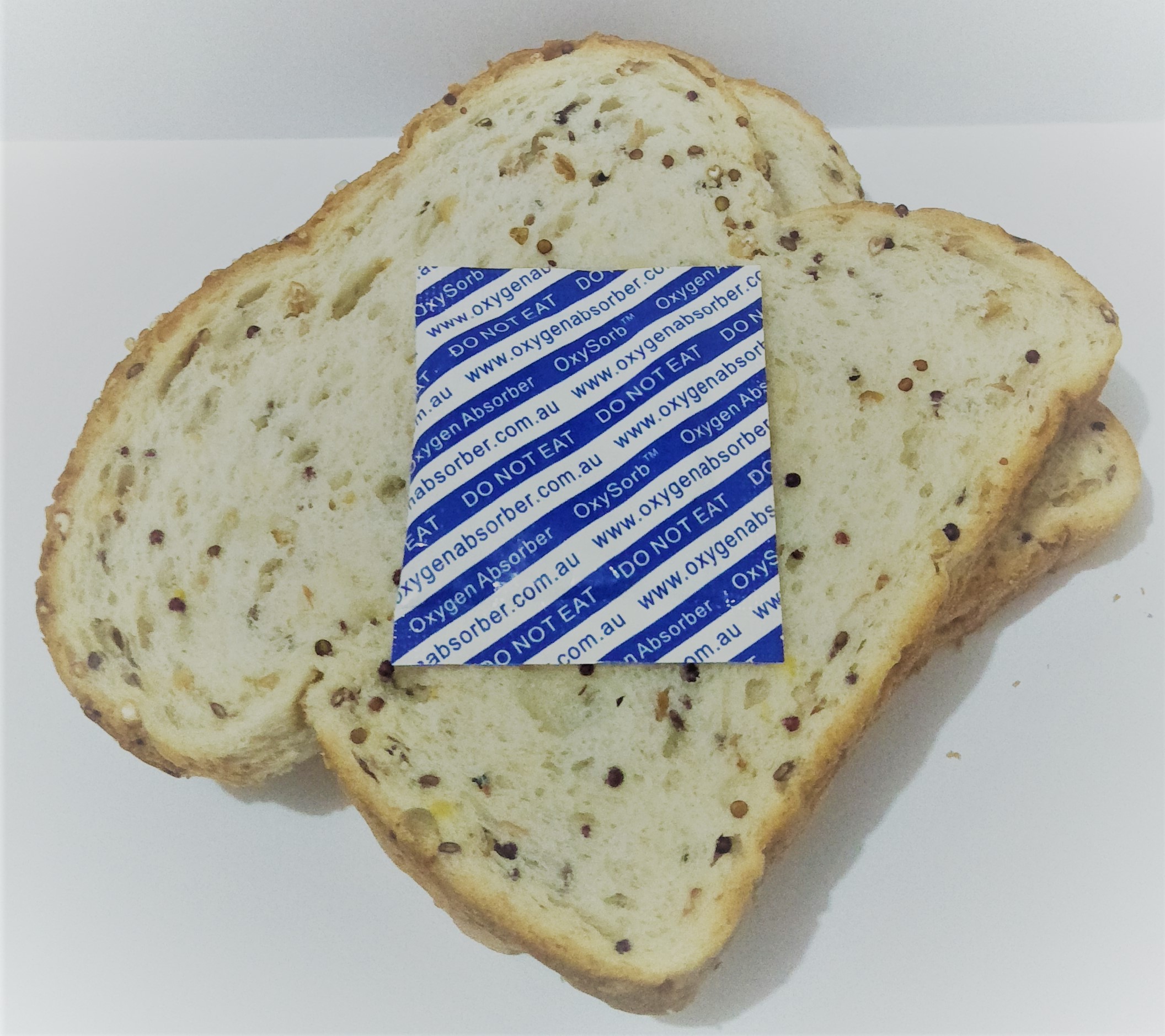
Melbourne, Victoria Nov 15, 2026 (Issuewire.com) Melbourne firm seeks patent for AI oxygen-absorber adviser and lodges Oxygen Absorbers Australia trade mark
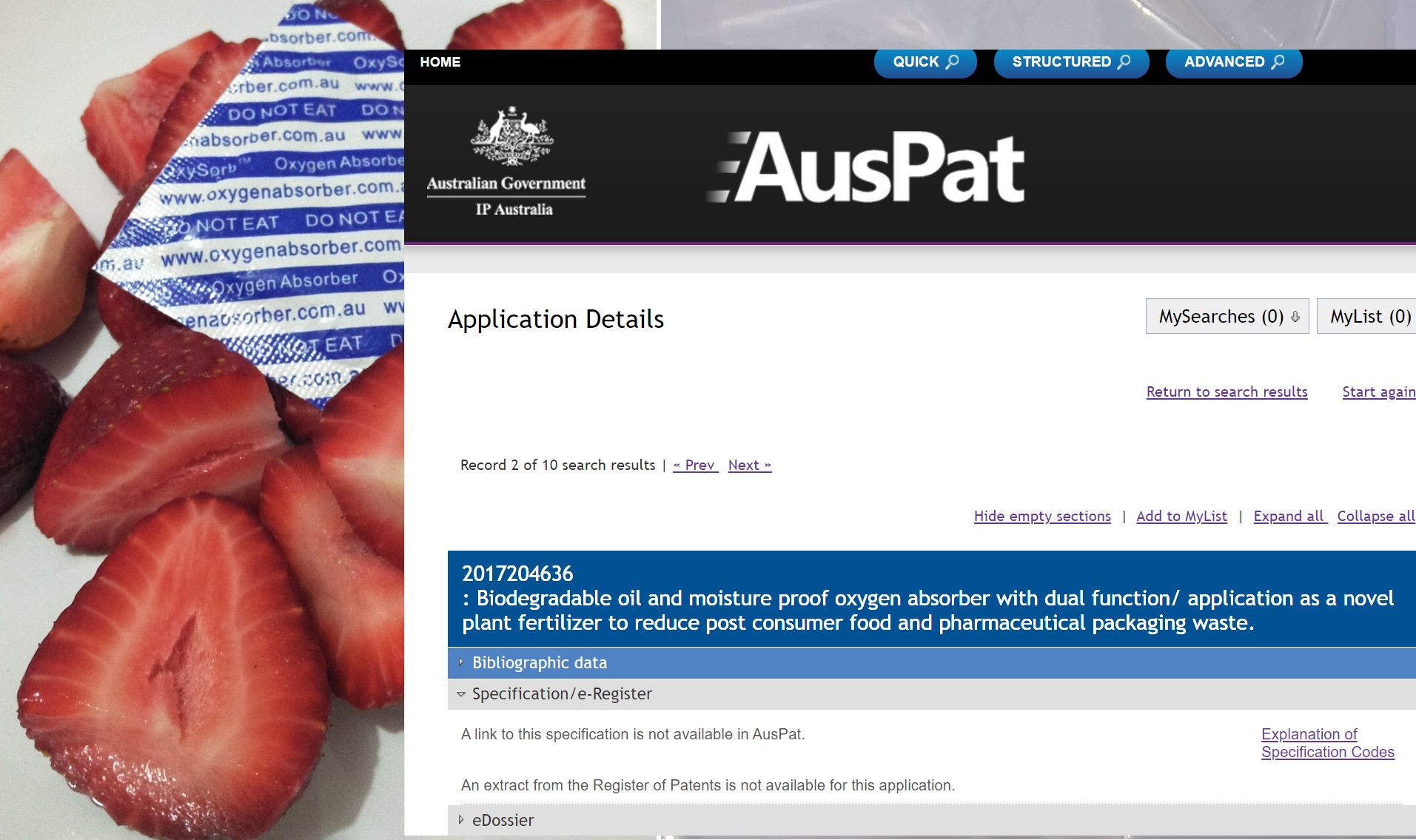
Provisional patent application 2026905839 covers AI OxySorb, an artificial-intelligence system that helps food businesses size and select oxygen absorbers. It is offered as Ask OxySorb AI at www.oxygenabsorber.com.au.
Wholesale Group International Pty Ltd, the Melbourne-based supplier of OxySorb oxygen absorbers, has taken two new steps to protect the intellectual property behind its Australian oxygen-absorber business. It has filed a provisional patent application for an artificial-intelligence (AI) advisory system, and it has applied to register a new trade mark that includes the words Oxygen Absorbers Australia.
At a glance
- Patent application: Australian provisional application 2026905839, filed 27 June 2026 and published 9 July 2026. Pending; not a granted patent.
- Trade mark application: 2676315 (Class 1), filed 13 July 2026. Pending registration and under examination by IP Australia.
- Existing protection: three registered OxySorb trade marks, dating from 2011, 2017 and 2018.
The patent application
The application is titled AI OxySorbTM An Artificial Intelligence-Assisted Oxygen Absorber Calculation, Selection and Packaging Advisory System. Google Patents lists Dr Simon Angelo Cichello as inventor and applicant, and records the application as pending.
The companys website describes the filing as a Wholesale Group International provisional patent application, with www.oxygenabsorber.com.au as its commercial implementation. On the site, Ask OxySorb AI combines absorber-size calculations, product-selection logic and a curated knowledge base to help food manufacturers, distributors and people storing food long term. A provisional application is not a granted patent, and its claims have not been examined.
The trade mark application
Application No. 2676315 was filed on 13 July 2026. It is a figurative (logo) mark in Class 1, the class for chemicals, which includes oxygen absorbers. Its recorded words include OXYGEN ABSORBERS AUSTRALIA, OXYSORB, WWW.OXYGENABSORBER.COM.AU and DO NOT EAT.
IP Australia lists the application as published and under examination. The first examination report was issued on 1 September 2026, and the deadline for acceptance is 1 December 2027. The mark is pending registration.
The company already holds three registered Australian trade marks for the OxySorb brand:
- 1456077 OxySorb (Class 16), registered from 26 October 2011
- 1859027 a logo including OXYSORB, the oxygenabsorber.com.au address and DO NOT EAT (Class 16), registered from 13 July 2017
- 1910214 OxySorb (Class 1, covering oxygen absorbers and scavengers), registered from 28 February 2018
The OxySorb range
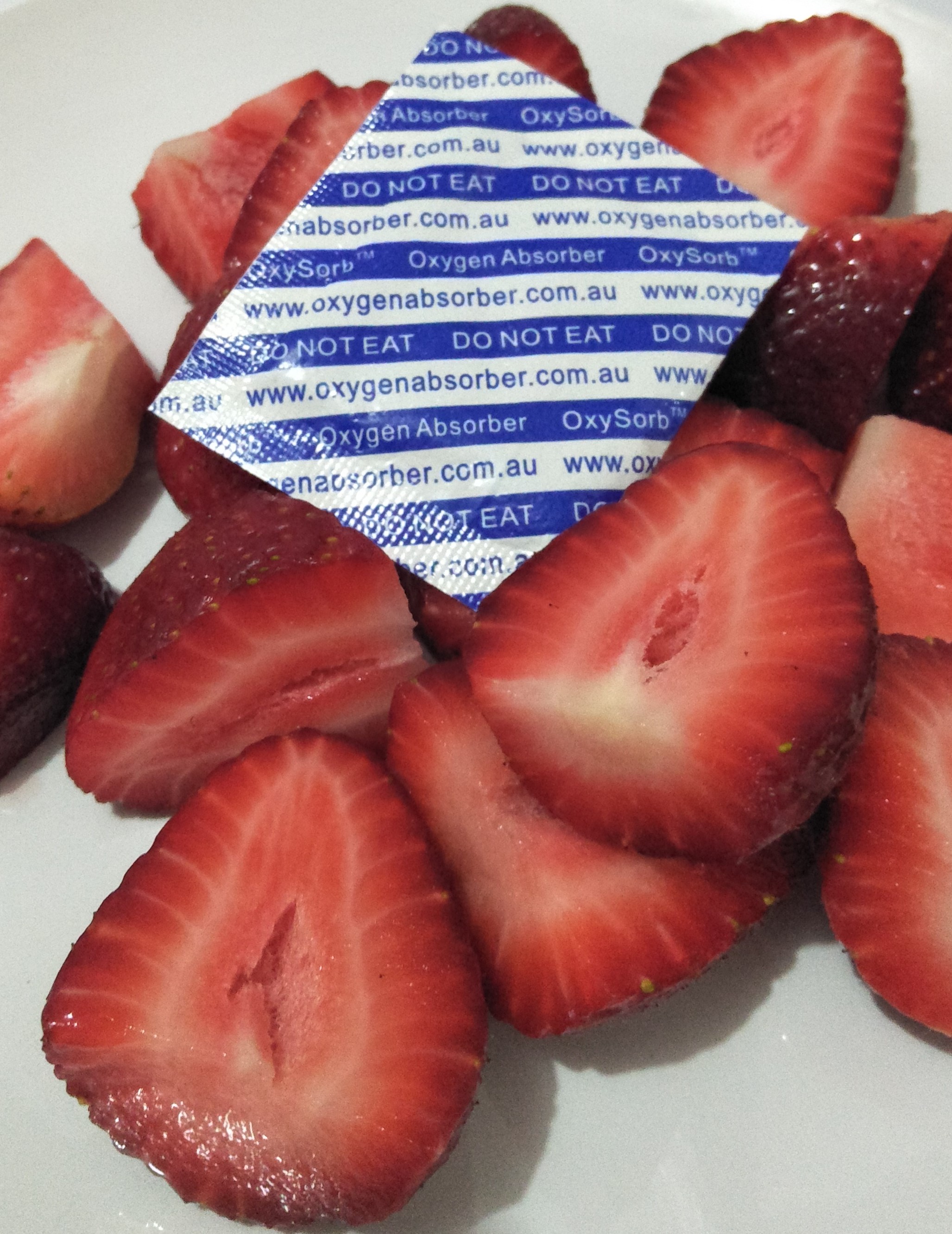
OxySorb sachets are iron-based oxygen absorbers in nine sizes: 20, 30, 50, 100, 200, 300, 500, 1000 and 2000 cubic centimetres (cc). They are used in commercial food packaging, pantry storage, dried foods, pet food, nutraceuticals and emergency food supplies.
Typical foods include jerky and biltong, nuts, dried fruit, grains, rice, flour, tea, coffee and baked goods. The sachets work only when sealed with the food in suitable barrier packaging, such as Mylar bags, foil pouches, high-barrier laminates, tubs, or glass or metal containers.
How oxygen absorbers work
Oxygen absorbers, also called oxygen scavengers, are small, porous sachets placed inside a sealed pack. Most of those used in the food industry contain iron powder (Cichello, 2015). Moisture in the pack activates the iron, which then reacts with oxygen. In effect, it rusts, and in doing so removes oxygen from the air around the food (Polyakov and Miltz, 2010). Salt is commonly added as a catalyst, and activated carbon is often included to absorb odours and other gases.
Air is about 20.9 per cent oxygen. Peer-reviewed research shows that iron-based absorbers help preserve colour, texture and aroma, slow rancidity, and inhibit moulds and other spoilage organisms that need oxygen. Used correctly in genuine oxygen-barrier packaging, they can bring oxygen down to about 100 parts per million, or 0.01 per cent (Cichello, 2015).
Oxygen absorbers are not desiccants: silica gel and clay sachets control moisture, not oxygen. Nor are they a substitute for refrigeration, good hygiene or a sound shelf-life program.
What the research shows
A large body of research supports the use of oxygen absorbers in food packaging (for an overview, see Cichello, 2015). Key findings include the following.
Nuts. In a 13-month study, Danish researchers compared shelled walnuts packed with an oxygen absorber, flushed with nitrogen, or packed in ordinary air. They also tested storage temperature and the oxygen permeability of the pack. The walnuts kept best at 11 °C or below, if desired combined with an oxygen absorber. Without chilled storage, acceptable quality was still possible using a very low-permeability film, such as an EVOH laminate, combined with nitrogen flushing (Jensen et al., 2003).
Sachet performance. Brazilian researchers measured how much oxygen an iron-based 300 cc sachet absorbed at 10 °C and 25 °C, at 75 to 85 per cent relative humidity. They derived equations linking the oxygen absorbed to humidity and to the packs oxygen transmission rate. For a small example pack, they estimated the sachet would stay active for 435 days at about 10 °C and 666 days at about 25 °C (Cruz, Soares and Geraldine, 2008).
Other studies show how much conditions matter. Moisture controls how fast iron-based absorbers work (Polyakov and Miltz, 2010). Actual capacity can exceed a sachets nominal rating (Miltz and Perry, 2005), yet in low-oxygen packs at refrigeration temperatures, sachets did not reach their nominal capacity within 24 hours (Brandon et al., 2009). The lesson, which Wholesale Group International also stresses to customers, is that the right sachet is not simply a function of bag volume. It depends on temperature, humidity, headspace and how much oxygen the packaging lets in over time.
Beverage bottles. Oxygen absorbers are not limited to sachets. Researchers at the Fraunhofer Institute for Process Engineering and Packaging (IVV) blended PET bottles with MXD6, a barrier polymer, used either on its own or with a catalyst that makes it work as an oxygen absorber. Bottles with the active absorber kept dissolved oxygen at or below 0.2 mg per litre for at least six months, with better protection at higher MXD6 levels (Müller et al., 2011; Schmid et al., 2012).
Dried fruit and bread. Working at CSIRO in Victoria, Tarr and Clingeleffer (2005) achieved 100 per cent mortality of red flour beetle in sealed packs of sultanas treated with a commercial oxygen absorber, and examined the effect on fruit colour. Greek researchers tested an ethanol emitter, alone or combined with an oxygen absorber, as an alternative to chemical preservatives in sliced wheat bread (Latou et al., 2010).
Food safety. A Utah State University Extension fact sheet explains household use. It notes that iron-based absorbers can lower the oxygen in a sealed pack to very low levels, and warns that only dry foods should be stored this way, because moist foods in reduced-oxygen packs carry a risk of botulism (Washburn, 2011). Laboratory work supports that warning. High-moisture crumpets deliberately contaminated with Clostridium botulinm spores became toxic within four to six days at 25 °C in every packaging treatment tested, including packs with an oxygen absorber, while still looking and smelling acceptable (Daifas et al., 1999).
Choosing the right size
The cc rating on an OxySorb sachet is its oxygen capacity, not the volume of the bag. Because air is only about one-fifth oxygen, a 300 cc absorber is designed to remove about 300 millilitres of oxygen, the amount in roughly 1.5 litres of air. This is a rule of thumb only.
Wholesale Group International cautions that generic size charts can be inaccurate. The right sachet depends on the free headspace, the foods moisture, the packs oxygen and water-vapour transmission rates, and the quality of the seal. The AI OxySorb patent application addresses this sizing and advisory problem. The company also offers technical support and publishes guidance at oxygenabsorber.com.au.
Using sachets safely
Iron-based absorbers start working as soon as they are exposed to air. Keep unused sachets in their original protective packaging until needed, and reseal any remainder promptly. Seal sachets inside genuine barrier packaging straight away; ordinary thin plastic bags are generally unsuitable. Remove sachets before microwaving food.
OxySorb sachets are labelled Do Not Eat. The iron powder inside is poorly absorbed by the body, and a recent case report describes a child who swallowed the contents of a sachet without ill effects (Yorgun et al., 2026). However, iron poisoning requiring treatment has been reported in a dog that ate oxygen-absorber sachets from a packet of treats (Brutlag et al., 2012). If a sachet is swallowed, seek medical or veterinary advice and keep the packaging on hand. In Australia, the Poisons Information Centre can be reached on 13 11 26.
Oxygen absorbers and food law
An oxygen absorber is packaging, not food, but it travels inside the food pack. Food law therefore applies to it in both Australia and China. The main laws, standards and agreements are summarised below; businesses should check the current text of each before relying on it.
Australia and New Zealand: FSANZ and the Food Standards Code
Food Standards Australia New Zealand (FSANZ) develops the Australia New Zealand Food Standards Code under the Food Standards Australia New Zealand Act 1991 (Cth). The Code addresses oxygen absorbers directly. Standard 1.1.1 requires that any packaging, and any article or material in the packaging or in contact with the food, must not be capable of being swallowed, obstruct the airway or otherwise cause harm if taken into the mouth, and the Codes own example of such articles includes oxygen absorbers. In Australia, clause 9 of Standard 3.2.2 (Food Safety Practices and General Requirements) also requires food businesses to use packaging that is fit for its intended use and not likely to contaminate food.
Standard 3.2.2A (Food Safety Management Tools), enforceable since 8 December 2023, adds food safety supervisor, food handler training and record-keeping requirements for food service, catering and some retail businesses. Standard 3.2.1 (Food Safety Programs) sets out written, HACCP-based food safety programs for businesses that the states and territories require to have them. In New Zealand, the Code is given effect by the Food Act 2014 (NZ).
Uniform food law in the states and territories
Under the intergovernmental Food Regulation Agreement, each state and territory bases its food law on nationally agreed Model Food Provisions and adopts the Food Standards Code, so the same food standards apply across Australia. The Acts that give the Code legal effect are:
- Victoria: Food Act 1984 (Vic)
- New South Wales: Food Act 2003 (NSW)
- Queensland: Food Act 2006 (Qld)
- South Australia: Food Act 2001 (SA)
- Western Australia: Food Act 2008 (WA)
- Tasmania: Food Act 2003 (Tas)
- Australian Capital Territory: Food Act 2001 (ACT)
- Northern Territory: Food Act 2004 (NT)
Commonwealth laws: imports, exports, customs and biosecurity
All imported food must meet biosecurity conditions under the Biosecurity Act 2015 (Cth) and food safety requirements under the Imported Food Control Act 1992 (Cth). The latter establishes the risk-based Imported Food Inspection Scheme run by the Department of Agriculture, Fisheries and Forestry. The Customs Act 1901 (Cth) governs the declaration and clearance of goods entering and leaving Australia. Agricultural and food exports are regulated under the Export Control Act 2020 (Cth) and its commodity rules, which commenced on 28 March 2021 and replaced the Export Control Act 1982. Claims made on packs and websites are also subject to the Australian Consumer Law (Schedule 2 to the Competition and Consumer Act 2010 (Cth)).
China: food safety law, standards and import customs
Chinas Food Safety Law of the Peoples Republic of China applies not only to food but also to the packaging materials and containers used for it. The law was comprehensively revised in 2015 and amended in 2018 and 2021. The most recent amendment was adopted on 12 September 2025 and took effect on 1 December 2025. Food contact materials must meet national food safety standards, including GB 4806.1-2016 (general safety requirements for food contact materials and articles) and GB 9685-2016 (additives in food contact materials), both in force since 19 October 2017. Food oxygen absorbers also have their own industry standard, SB/T 10514-2008 (Oxygen absorber for foods), and the film used to package them is covered by GB/T 44587-2024, in force from 1 April 2025.
Imports are controlled by the General Administration of Customs of China (GACC) under the Customs Law, the Import and Export Commodity Inspection Law and the Biosecurity Law (in force 15 April 2021). GACC Decree 249, the Administrative Measures on Import and Export Food Safety (in force 1 January 2022), sets the rules for imported food. GACC Decree 280, which replaced Decree 248 on 1 June 2026, governs the registration of overseas food manufacturers. Prepackaged foods sold in China must be labelled in Chinese; the revised labelling standard GB 7718-2025 takes effect on 16 March 2027. Australian exporters also benefit from the ChinaAustralia Free Trade Agreement (ChAFTA), in force since 20 December 2015.
HACCP and BRCGS
HACCP (Hazard Analysis and Critical Control Point) is the internationally agreed method for identifying and controlling food safety hazards. Its seven principles are set out in the Codex Alimentarius General Principles of Food Hygiene (CXC 1-1969), revised in 2020 and 2022. In a packed-food HACCP plan, the oxygen absorber, the barrier film and the quality of the seal can all be control measures for spoilage and shelf life.
BRCGS publishes two standards relevant to oxygen absorbers: the Global Standard Food Safety, currently Issue 9 (published 1 August 2022, with Issue 10 in development), and the Global Standard Packaging Materials, currently Issue 7 (published 28 October 2024 and audited from 28 April 2025). Both are widely required by retailers, and both build on HACCP-style hazard and risk analysis.
Getting the absorber size and the pack right is a technical decision, not a guess, said [Dr Simon Cichello, Director, Wholesale Group International Pty Ltd]. The AI OxySorb patent application and the Oxygen Absorbers Australia trade mark application put better advice, and a clearly identified Australian brand, behind a technology that food science has relied on for decades.
Find OxySorb online
OxySorb products, sizing help and technical information are availablefrom:
- OxySorb brand site: oxysorb.com.au
- Ask OxySorb AI sizing tool and technical notes: oxygenabsorber.com.au
- Online shop: wholesalegrouponline.com
- Wholesale Group International: wholesalegroup.com.au/oxygen_absorbers
- eBay store (Oxygen Absorber Australia): ebay.com.au/simoncichello
- Facebook: Oxygen Absorber Australia
Media and technical enquiries can be directed to the contacts below.
About OxySorb
OxySorb is a registered trade mark of Wholesale Group International Pty Ltd (ABN 50 149 620 771), a Melbourne-based supplier of food packaging and related products. The OxySorb range of iron-based oxygen absorber sachets runs from 20 cc to 2000 cc. Oxygen Absorbers Australia is the subject of Australian trade mark application No. 2676315, which is pending registration and under examination. For more information, visit www.oxysorb.com.au, www.oxygenabsorber.com.au or www.wholesalegroup.com.au.
Media contact
Dr. Simon Cichello, Ph.D.
Wholesale Group International Pty Ltd
Melbourne, Victoria, Australia
Email: info@wholesalegroup.com.au
Phone: +61 412 359 026
Web: www.oxysorb.com.au | www.oxygenabsorber.com.au | www.wholesalegroup.com.au
Media Contact
Oxygen Absorber Australia
(+61) 0412359026
PO Box 2019
Source :Wholesale Group International Pty Ltd (ABN 149 620 771)
This article was originally published by IssueWire. Read the original article here.


