
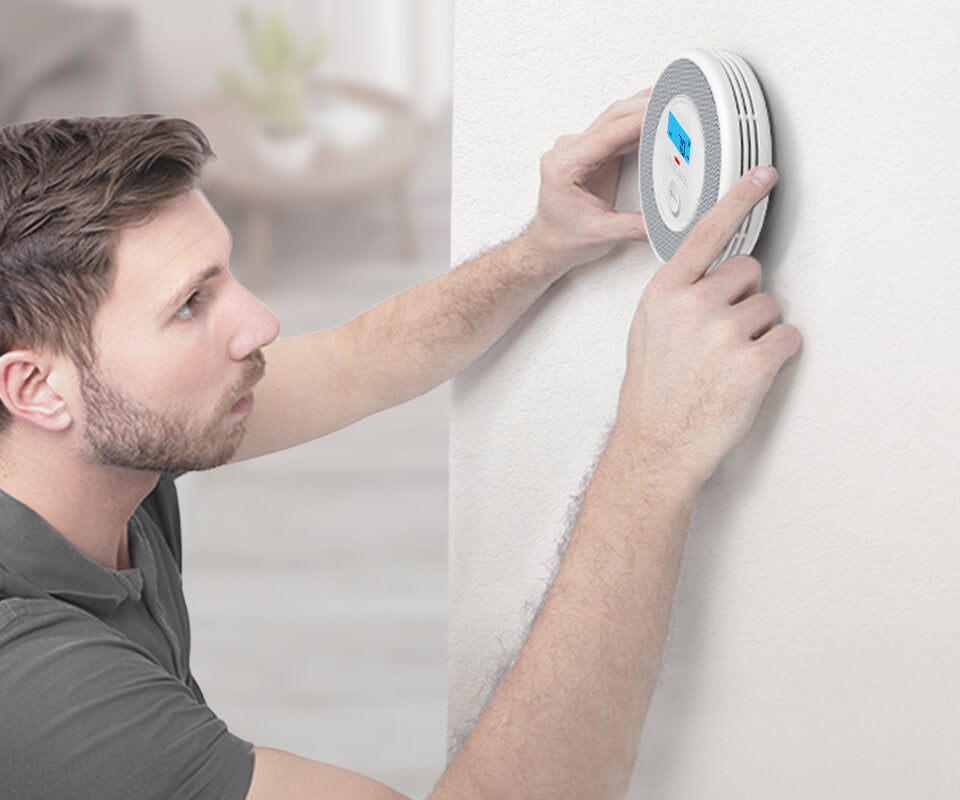
Home safety guidance addresses different hazards, alarm placement and connected warnings
WILMINGTON, Del., Nov. 17, 2026 — X-SENSE is highlighting the importance of detecting both smoke and carbon monoxide (CO) in the home. The guidance encourages households to review alarm placement, maintain fuel-burning equipment and practice emergency response plans.
Two Hazards, Two Forms of Detection
Smoke may spread through a home before occupants realize a fire has started. Carbon monoxide presents a different problem: the gas has no color or odor, and exposure can occur when fuel-burning appliances malfunction or exhaust enters living spaces.
Furnaces, water heaters, fireplaces, portable generators and vehicles are potential CO sources. The Centers for Disease Control and Prevention identifies headache, dizziness, weakness, nausea and confusion among possible poisoning symptoms. Smoke alarms cannot detect CO, and CO-only alarms cannot detect smoke.
Place Alarms Where Warnings Are Needed
The U.S. Fire Administration recommends smoke alarms inside every bedroom, outside separate sleeping areas and on every level, including basements. The U.S. Consumer Product Safety Commission advises CO alarms on every level and outside sleeping areas. Each device must be placed according to its instructions and applicable local requirements.
A combined smoke and carbon monoxide alarm can monitor both hazards at a suitable location, but a single combination unit does not necessarily cover every required position in a home. Residents should consider bedroom doors, multiple floors and whether audible warnings can be heard throughout the property.
Consider Connected Warnings
Interconnected alarms can extend warnings beyond the room where danger is detected. For example, the X-SENSE XP0A-MR Wi-Fi smoke and carbon monoxide detector uses a photoelectric smoke sensor and an electrochemical CO sensor. It provides voice alerts identifying the alarm location and uses a replaceable CR123A battery.
According to the manufacturer, app notifications require an SBS50 base station connected through 2.4 GHz Wi-Fi; the XP0A-MR is not a direct-Wi-Fi alarm. Homeowners should verify compatibility when linking multiple alarms and follow the installation and pairing instructions.
Maintain Equipment and Prepare to Leave
Households should test alarms as instructed, respond promptly to battery or fault signals and replace devices at the end of their service life. Heating systems, chimneys and vents should be inspected regularly by qualified technicians; portable generators must remain outdoors, away from openings.
When a smoke or CO alarm signals danger, residents should leave immediately and call emergency services from outside. An escape plan, clear exits and a designated meeting place remain essential because alarms provide warnings, not protection from the hazards themselves.
About X-SENSE
Founded in 2013, X-SENSE has safeguarded more than 15 million households worldwide with its comprehensive range of smoke alarms, carbon monoxide detectors, and environmental sensors. Backed by international certifications and designed for long-term reliability and user convenience, X-SENSE is committed to delivering innovative safety for every home.
Media Contact
Company Name: X-SENSE ELECTRONICS LLC
Contact Person: Martin
Email: partners@x-sense.com
Website: https://www.x-sense.com/
State/Country: Delaware


