Key Takeaways
- The planning phase can add weeks or even months before construction begins. Most bathroom remodels involve 6-10 weeks of active work, with additional time needed for design, permitting, and material selection.
- Set aside a 15-20% contingency fund beyond your base budget to cover unexpected repairs, plumbing upgrades, or permit fees.
- Bathroom renovations in California often cost more than national averages due to higher labor rates, stricter codes, and material transportation costs.
- Licensed professionals should handle plumbing, electrical, and waterproofing work, while homeowners can take on tasks like painting or basic demolition.
- Material choices and ventilation planning affect both long-term durability and maintenance costs.
First-time bathroom renovations can feel overwhelming, especially for homeowners tackling their first major construction project. Whether planning a full renovation or upgrading one major feature like a shower, success usually comes down to thoughtful preparation, realistic budgeting, and understanding which tasks require professional expertise.
Planning Phase Requires Significant Time Investment
One of the most common mistakes first-time renovators make is underestimating how long the planning stage actually takes. The planning phase alone can add several weeks—or even months—to the overall timeline. While that may seem excessive, this preparation often prevents costly mistakes during construction.
Bathroom renovations require coordination between multiple trades, including plumbing, electrical work, tiling, cabinetry installation, and ventilation. Planning also involves choosing fixtures and finishes, obtaining permits, and scheduling contractors. For homeowners beginning a bathroom remodel, skipping these steps often leads to delays once construction starts.
Budget Smart: Essential Cost Planning for First-Timers
1. Build a 15-20% Contingency Fund for Unexpected Expenses
One of the most common budgeting mistakes homeowners make is failing to prepare for unexpected costs. Setting aside a 15-20% contingency fund helps prevent financial surprises once demolition begins.
Behind-the-wall discoveries are common during bathroom renovations. Contractors often uncover aging plumbing, hidden water damage, outdated wiring, or structural issues that need to be corrected before new materials are installed.
Contingency funds also help manage material pricing changes. Supply delays or discontinued finishes sometimes require homeowners to choose alternative products that cost more than originally planned. Treating contingency funds as a safety net rather than extra spending money helps projects continue smoothly.
2. Factor in Hidden Costs: Permits, Labor, and Material Changes
Many homeowners focus mainly on visible upgrades like tile, vanities, and lighting. However, several behind-the-scenes costs can significantly affect the final budget.
Permit fees and inspection requirements are common additions. Electrical upgrades, plumbing adjustments, and ventilation improvements often require inspections to ensure the work meets current building codes.
Labor costs can also vary depending on the complexity of the installation. Specialized trades such as tile installers, waterproofing professionals, and custom cabinet builders require experience and precision, which often increases labor costs.
Additional expenses—such as demolition disposal, material delivery, and temporary storage during construction—can also add up quickly if they are not included in early planning.
3. California Renovation Costs Run Higher Than National Averages
Homeowners in California frequently encounter renovation costs above the national average. Labor rates tend to be higher throughout the state, and stricter building codes can increase installation requirements.
Regional supply factors also influence pricing. Certain materials may require additional transportation or specialty ordering, which increases costs.
Realistic Timeline Expectations by Project Scope
Small Updates: Fixtures and Flooring (2-6 Weeks)
Smaller bathroom updates that focus on cosmetic improvements usually take two to six weeks to complete. These projects might include replacing fixtures, installing a new vanity, updating flooring, repainting walls, or upgrading lighting.
Because the existing layout remains unchanged, these renovations require fewer inspections and less coordination between trades. However, unexpected discoveries—such as water damage beneath flooring—can still extend the timeline.
Electrical upgrades or ventilation improvements may also require permits, which can add extra days or weeks depending on inspection schedules.
Full Remodel: Plumbing and Layout Changes (4-8 Weeks)
Full bathroom renovations that involve layout changes generally require four to eight weeks of active construction. These projects often include relocating plumbing lines, installing new electrical circuits, rebuilding walls, and replacing fixtures and finishes throughout the room.
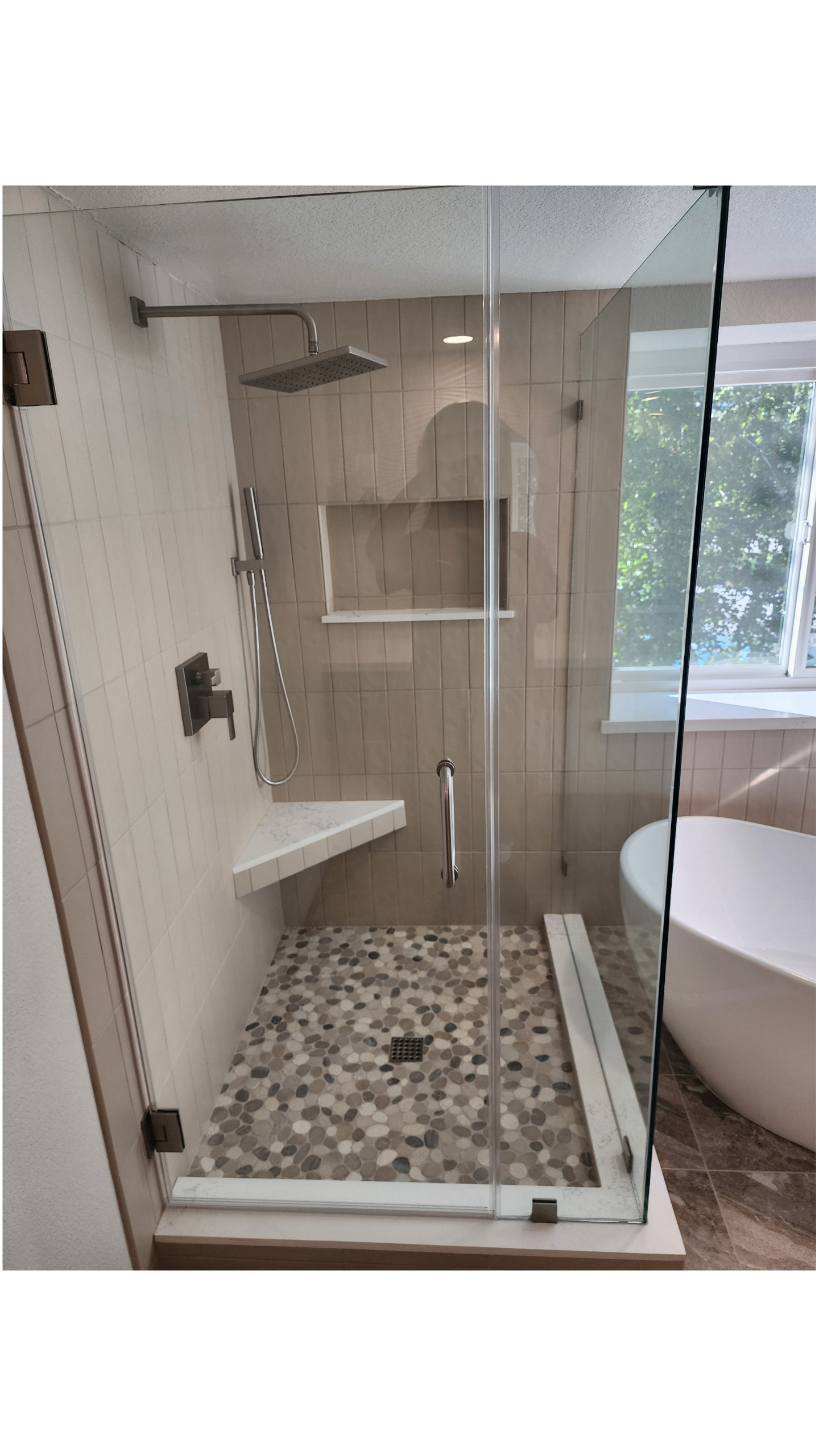
Features such as walk-in tile showers with built-in niches or benches may require additional installation time. Waterproofing layers must be applied carefully before tile work begins to ensure long-term durability.
Because plumbing, electrical work, drywall installation, and tile setting occur in sequence, each phase must be completed before the next can begin. Inspection schedules may also influence the final timeline.
Material Selection for Bathroom Durability
1. Moisture-Resistant Options: Porcelain Tile and Quartz Countertops
Bathrooms experience constant exposure to humidity and water, making material selection especially important. Choosing durable materials helps prevent mold growth, surface deterioration, and long-term maintenance issues.
Porcelain tile is widely used for bathroom floors and shower walls because it absorbs very little water—typically less than 0.5% absorption. This makes it highly resistant to moisture damage and staining.
Tile showers built with high-quality porcelain or stone surfaces offer both durability and design flexibility. With proper waterproofing and grout sealing, they can perform reliably for decades.
Quartz countertops are another popular option. Unlike natural stone surfaces, quartz does not require periodic sealing and offers excellent resistance to stains and scratches. Although the upfront cost may be higher, the low maintenance requirements often make it a practical long-term investment.
2. Essential Ventilation: Exterior-Vented Exhaust Systems
Ventilation is one of the most overlooked aspects of bathroom design. A properly installed exhaust fan removes humid air before moisture can accumulate on walls and ceilings.
Fans should vent directly outside the home rather than into attics or crawl spaces. Interior venting can trap moisture and create mold problems over time.
Selecting the correct fan size is also important. Units that are too small may fail to remove humidity effectively, while oversized fans can create unnecessary noise and drafts. Proper sizing ensures efficient moisture control and long-term protection for bathroom surfaces.
3. Smart Storage Solutions: Plan Early for Maximum Function
Storage planning should begin during the design phase rather than after construction begins. Built-in solutions such as recessed medicine cabinets, shower niches, and tall linen cabinets maximize space without crowding the room.
Planning storage early allows designers to use wall cavities and vertical space efficiently. These built-in features often provide more storage capacity than furniture added after renovation.
DIY vs. Professional Work: Know Your Limits
Homeowner-Friendly Tasks: Painting and Simple Demo
Some renovation tasks are manageable for homeowners and can help reduce labor costs. Painting walls and ceilings, removing old fixtures, and basic demolition are common examples.
Simple demolition may include removing vanities, mirrors, and accessories attached to walls. However, homeowners should proceed carefully around plumbing and electrical connections to avoid damaging important systems.
Protective equipment such as gloves, dust masks, and eye protection is essential during demolition work.
Professional-Only Work: Plumbing, Electrical, and Waterproofing
More technical work should always be handled by licensed professionals. Plumbing modifications require correct pipe connections and pressure management, while electrical work must meet strict safety codes.
Waterproofing is especially critical in bathroom construction. Improper installation can allow moisture to seep behind walls and floors, leading to extensive structural damage over time.
Experienced installers understand how to apply waterproof membranes, seal seams, and ensure proper drainage to prevent long-term water damage.
Chino Building Permits: What Requires Official Approval
Many bathroom renovation activities in Chino require building permits. Structural changes, plumbing modifications, electrical upgrades, and ventilation installations typically require official approval and inspection.
Permit requirements ensure renovations meet modern safety standards and local building codes. Skipping the permit process can create legal complications and affect future home sales.
Minor fixture replacements—such as installing a new toilet or faucet—usually do not require permits if no plumbing changes are involved. However, relocating pipes, adding circuits, or installing ventilation systems generally requires approval.
Experienced contractors typically handle permit applications and inspection scheduling to ensure projects move forward without unnecessary delays.
Why Experienced Planning Matters in Bathroom Renovations
Bathroom renovations tend to succeed or fail long before demolition begins. Projects that start with a clear design plan, realistic budget expectations, and properly coordinated trades are far more likely to stay on schedule and avoid costly mid-project changes.
Industry professionals often emphasize that thoughtful preparation is especially important in bathrooms because so many systems must work together in a relatively small space. Plumbing placement, ventilation, waterproofing, tile layout, and storage solutions all need to be considered before construction begins. When these elements are addressed early, homeowners gain more flexibility in both design and budgeting decisions.
Local remodeling experts also note that visiting a showroom during the planning phase can help homeowners better visualize how different materials work together. Seeing tile, cabinetry, countertops, and fixtures in person often leads to more confident design decisions compared to selecting products from catalogs alone.
With careful preparation and informed decisions, homeowners can approach a bathroom renovation with greater confidence. The result is a space that not only looks better, but functions more effectively for everyday use while adding lasting value to the home.
Custom Tile Stone & Decor Inc.
4236 Riverside Dr.
Chino
CA
91710
United States


